
Easy Crochet Baby Blanket Patterns for Beginners
There is something special about making a crochet baby blanket by hand. I love that a simple ball of yarn can slowly turn into something soft, useful, and meaningful. A handmade blanket can become a baby-shower gift, a cozy nursery accessory, or simply a project that you enjoy working on during quiet evenings.
When I choose a crochet baby blanket pattern, I usually look for three things: a stitch that is easy to remember, yarn that feels soft and comfortable, and a finished design that looks beautiful without requiring complicated techniques.
That is why I especially like simple blanket patterns. You do not need dozens of different stitches or complicated shaping to make something impressive. A few basic stitches, thoughtful color choices, and neat finishing can make a beautiful blanket.
Below are five easy crochet baby blanket ideas that are suitable for beginners. Each one uses a simple construction so you can concentrate on keeping your stitches even and enjoying the process.
1. Soft Moss Stitch Baby Blanket
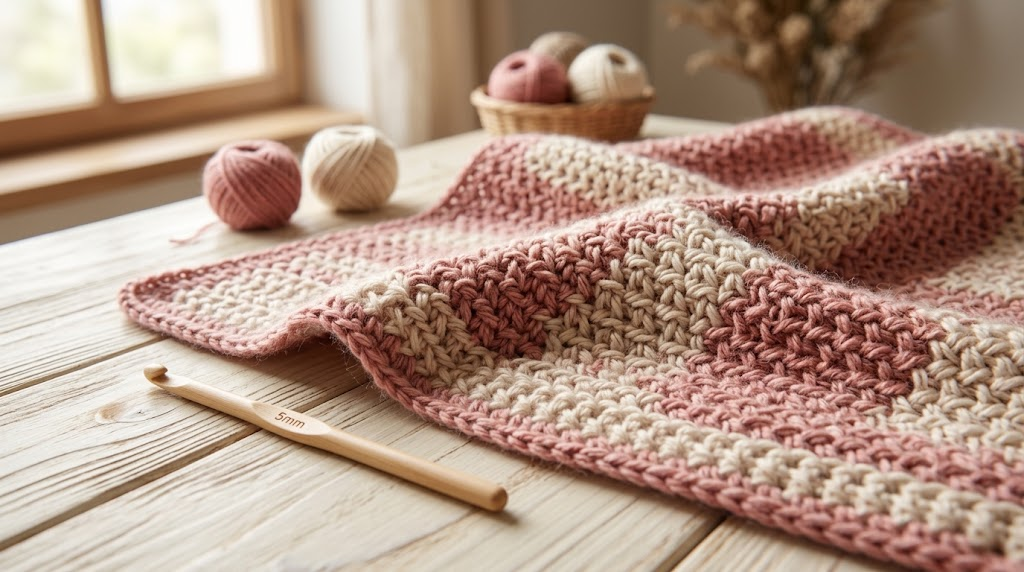
The moss stitch is one of my favorite choices when I want a blanket that looks textured without being difficult.
The finished fabric has a neat, woven appearance, and the small spaces between stitches give it a modern handmade look. It is also a good stitch to practice if you are still learning how to keep your tension consistent.
What you need
- Medium-weight or soft DK yarn
- Crochet hook appropriate for your yarn
- Tapestry needle
- Scissors
- Measuring tape
- Stitch marker, if helpful
For a classic baby blanket, I would choose a gentle combination such as cream and dusty rose, ivory and sage, or pale blue and white.

Basic stitch idea
The moss stitch is commonly worked with single crochet and chain stitches.
For a simple version:
Foundation: Chain an even number of stitches.
Row 1: Single crochet in the fourth chain from the hook, chain 1, skip 1 chain, single crochet in the next chain. Repeat across.
Row 2: Chain 2 and turn. Work a single crochet into the next chain-1 space, then continue with chain 1, single crochet into the next chain-1 space across.
Continue repeating the row until the blanket reaches your preferred length.
The important thing is not to work too tightly. I find that a relaxed tension gives this stitch a much softer drape.
My finishing tip
Before making the entire blanket, I recommend crocheting a small swatch. It lets you see whether you like the fabric and gives you a chance to adjust your hook size.
A slightly larger hook can create a softer fabric, while a smaller hook generally produces a firmer fabric.
2. Simple Double Crochet Stripe Blanket
If you are completely new to crochet, this is the style I would consider first.
Double crochet grows quickly, so you can see your blanket getting bigger without spending hours on every row. It also makes a wonderful canvas for experimenting with color.
I especially like using two or three colors rather than trying to create an elaborate stitch pattern.

Simple color plan
Try:
- Cream
- Blush pink
- Soft dusty rose
Or create a gender-neutral version with:
- Warm ivory
- Beige
- Soft taupe
Basic pattern structure
Make a foundation chain to your desired width.
Row 1: Work double crochet across the chain.
Row 2: Chain 2, turn, and work double crochet across.
Continue repeating the double-crochet row.
For stripes, change colors every 3–5 rows. You can make narrow stripes for a delicate look or wider stripes for a more modern design.
When changing colors, I prefer completing the final yarn-over of the last stitch with the new color. This creates a cleaner transition.
Why I like this design
The beauty of a simple double crochet blanket is that it is easy to customize.
Want a smaller receiving blanket? Start with fewer chains.
Want a toddler-sized blanket? Add more rows.
Want something colorful? Use several shades.
Want something minimalist? Make the entire blanket in one neutral color.
It is also a good project for practicing even edges because the repeating rows make it easier to notice when a stitch has accidentally been added or skipped.
3. Textured Half Double Crochet Baby Blanket
If you want something slightly more interesting than basic double crochet, I would try a half-double-crochet texture.
Half double crochet gives the blanket a lovely balance between height and density. With the right yarn, it creates a soft fabric that looks more detailed than the actual technique is.

Materials
For this version, I would choose a soft medium or bulky yarn and a compatible hook.
You will also need:
- Tapestry needle
- Scissors
- Measuring tape
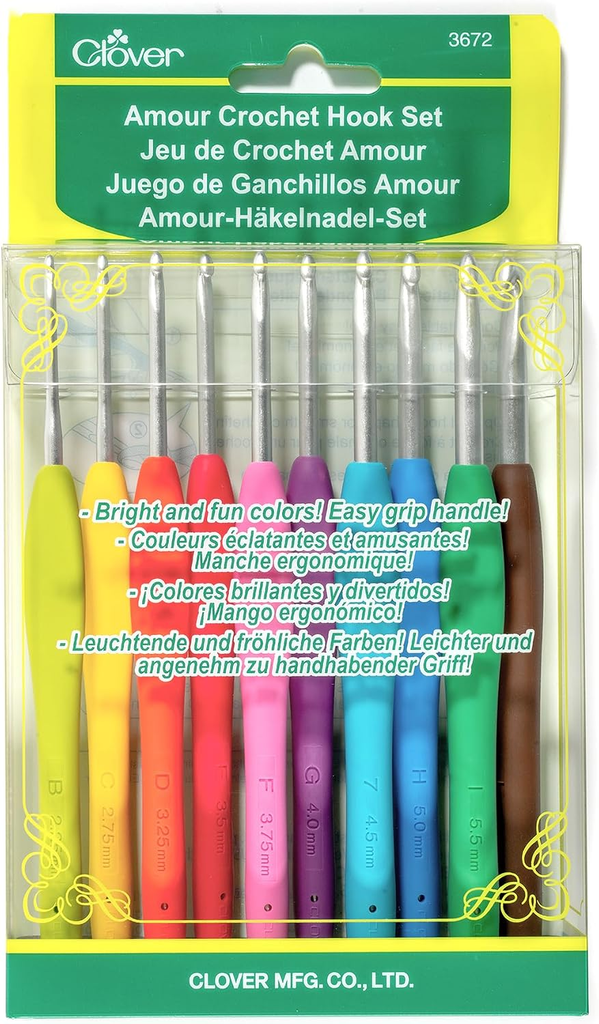
One product I would consider keeping in my crochet supplies is the Clover Amour Crochet Hook Set. I like ergonomic-style hooks for longer projects because a comfortable handle can make repetitive rows easier on the hands. If you only need one hook, you do not have to buy an entire set, but a set can be useful if you regularly make blankets in different yarn weights.
Basic stitch pattern
Chain the number of stitches needed for your desired width.
Row 1: Half double crochet across.
Row 2: Chain 1 and turn. Work half double crochet across.
Repeat.
For additional texture, you can alternate where you insert your hook on selected rows. Working into different loops can create subtle horizontal ridges.
A useful beginner tip
Do not judge your blanket by the first few rows.
Sometimes a stitch pattern looks ordinary when you have only crocheted two or three rows. Once you have 10 or 15 rows, the texture becomes much more noticeable.
I also recommend stopping occasionally to lay the blanket flat. This helps you spot uneven edges before they become difficult to correct.
4. Cozy Chenille Baby Blanket
For a super-soft and squishy blanket, chenille yarn is hard to resist.
The thick texture can make a simple stitch look luxurious, which is one reason bulky yarn is popular for quick blanket projects. The source collection also uses bulky and super-bulky yarn for several fast baby blanket designs.
One yarn I would consider for this type of project is Bernat Baby Blanket. It is a thick chenille-style yarn commonly used for soft blankets, and it is available in a range of colors.

Simple pattern idea
For an easy version, use a basic single-crochet and double-crochet combination.
Foundation: Chain an even number.
Row 1: Work a single crochet and double crochet into the same stitch, skip the next stitch, and repeat across.
Following rows: Work the same single-crochet/double-crochet combination into the appropriate spaces created by the previous row.
Keep repeating until you reach the desired length.
Why thick yarn works well
The larger yarn means the blanket grows much faster than a fine-yarn project. It can also produce a beautifully cushioned fabric without complicated stitches.
However, there is one thing I always keep in mind with bulky yarn: stitch visibility can be lower.
If you are a beginner, count your stitches regularly. With fluffy yarn, it is surprisingly easy to accidentally skip a stitch without noticing.
I also recommend working under good lighting, especially when you are learning the pattern.
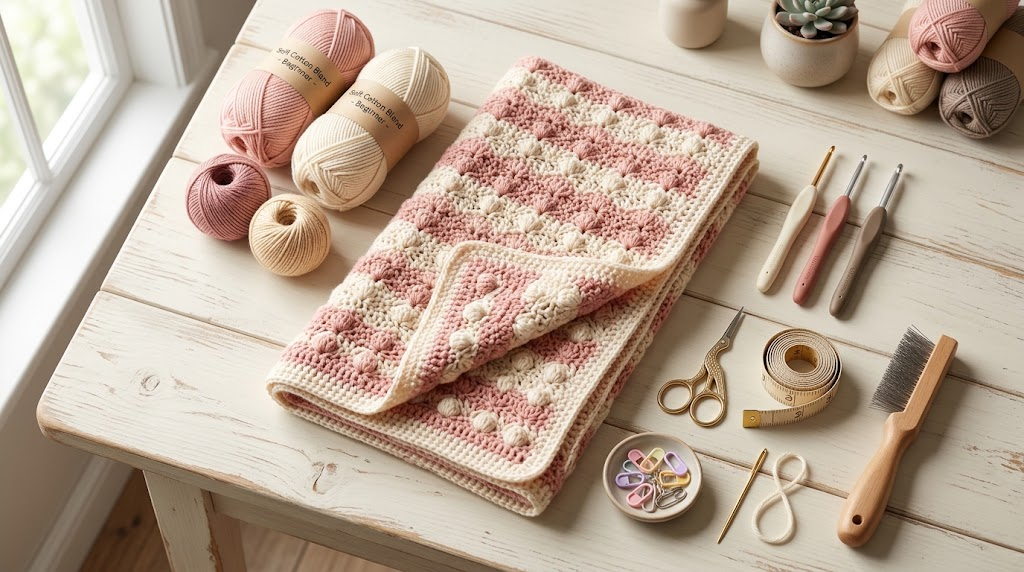
5. Easy Two-Color Shell Baby Blanket
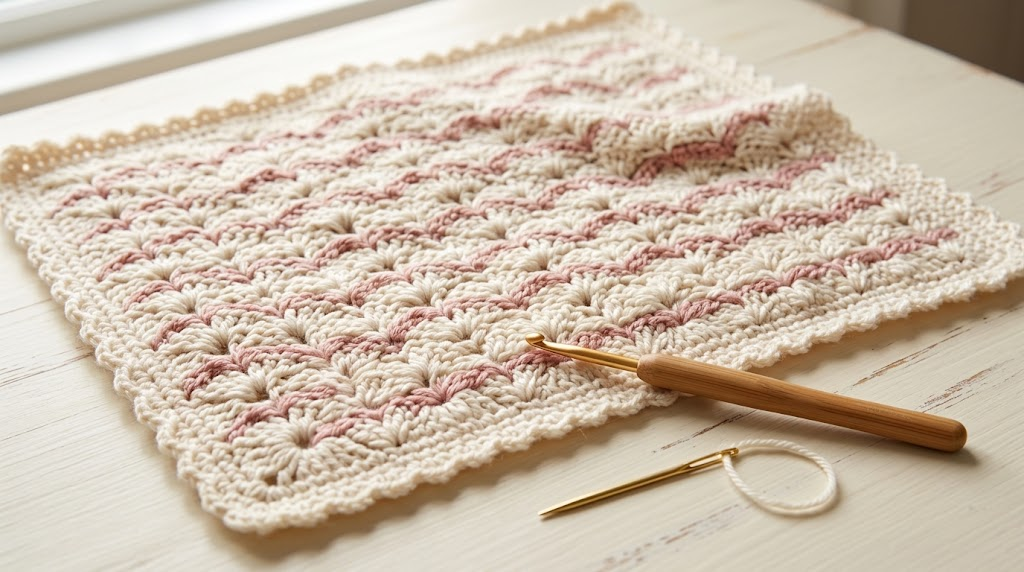
If you want a blanket that looks decorative but still uses familiar stitches, a simple shell-style pattern is a lovely option.
Shells create gentle scalloped texture across the fabric and can make a handmade blanket look more elaborate than it really is.
Color combination
My favorite approach is to use one calm neutral and one soft accent color.
For example:
- Warm ivory + blush
- Cream + dusty rose
- White + sage
- Beige + pale blue
You can also make the entire blanket in one color if you prefer a minimalist nursery style.
Simple shell construction
Start with a foundation chain using a suitable multiple for your chosen shell repeat.
A basic shell can be created by working several double crochet stitches into the same stitch or space.
For example:
Shell: 5 double crochet stitches worked into the same space.
Work a single crochet between shell groups.
On the following row, place your shell into the designated space between the previous shells.
Repeat this pattern across the blanket.
The exact foundation-chain multiple should match the shell repeat you choose, so I recommend making a small swatch first rather than guessing the starting chain for a full-size blanket.
Finishing the blanket
Once the main body reaches your preferred length, I like adding a simple border.
You do not need a complicated lace border. One or two rounds of single crochet can make the edges look cleaner and more finished.
If the blanket has slightly uneven edges, a border can also help visually balance them.
How to Choose Yarn for a Crochet Baby Blanket
Yarn choice can completely change the look and feel of your blanket.
For a baby project, I generally look for yarn that is:
- Soft
- Comfortable against delicate skin
- Easy to wash
- Suitable for the intended use
- Available in a color I actually enjoy working with
Always check the manufacturer’s care instructions.
If you are making a gift, I also like to think practically. A beautiful blanket that requires complicated washing may be less convenient for new parents than a simple machine-washable option.
For chunky blankets, check how much yarn is included in each skein. Two yarns may look similar in the store but have very different yardage.
How Big Should a Crochet Baby Blanket Be?
There is no single perfect baby blanket size.
A small receiving blanket can be convenient for wrapping or carrying, while a larger blanket can be useful for tummy time or growing with the child.
For a beginner project, I suggest choosing your size based on how you plan to use the blanket rather than trying to follow one universal measurement.
The important thing is to keep the width consistent and measure the blanket as you go.
If you want to enlarge a pattern, check whether its stitch repeat allows you to add stitches cleanly. Many crochet blanket patterns can be adjusted by changing the starting-chain length according to the pattern repeat.
5 Beginner Tips for a Better Crochet Baby Blanket
1. Make a small swatch first
A swatch saves time. It shows you whether your hook and yarn combination creates the fabric you want.
2. Count your stitches
This is especially important with blankets because one missing stitch can slowly make your edges narrower.
3. Do not crochet too tightly
Tight tension can make a blanket stiff. Try to keep your hands relaxed and let the hook move naturally.
4. Weave in your ends securely
Do not leave loose yarn tails simply because you are tired of finishing. A neat finish makes a handmade blanket look much more professional.
5. Check the finished blanket carefully
Before gifting it, inspect the entire blanket for loose ends, missed stitches, or areas that need tidying.
For baby items, I prefer simple, secure designs rather than decorations that could come loose. If you add appliqués or embellishments, make sure they are securely attached and appropriate for the intended use.
My Final Thoughts
Making a crochet baby blanket does not have to be intimidating.
When I want a relaxing project, I would rather choose a simple stitch that I can enjoy repeating than a complicated pattern that requires constant counting. Moss stitch, double crochet, half double crochet, chenille textures, and simple shells can all create beautiful results with relatively straightforward techniques.
The biggest lesson I have learned from blanket projects is that yarn and color can do much of the design work for you. Even a very simple stitch can look special when paired with soft colors and a beautiful texture.
If you are making your first baby blanket, start small, make a swatch, count your stitches, and don’t worry if your first few rows aren’t perfect. Crochet gets easier with every row.
Most importantly, enjoy making something with your own hands. A handmade baby blanket is not just a crochet project—it can become a keepsake that carries the time, care, and creativity you put into it.
