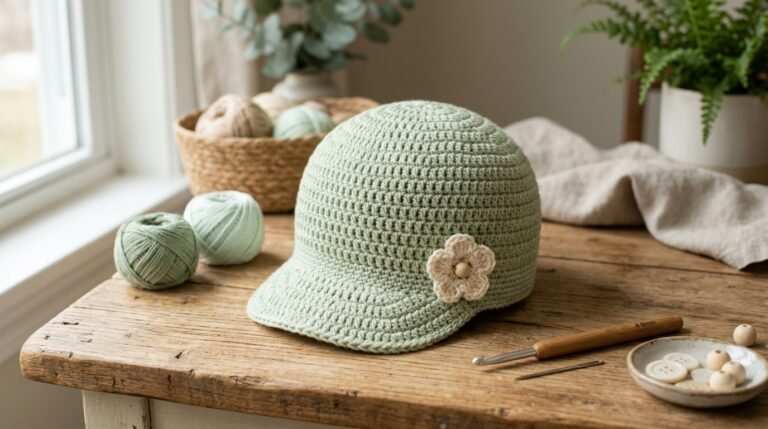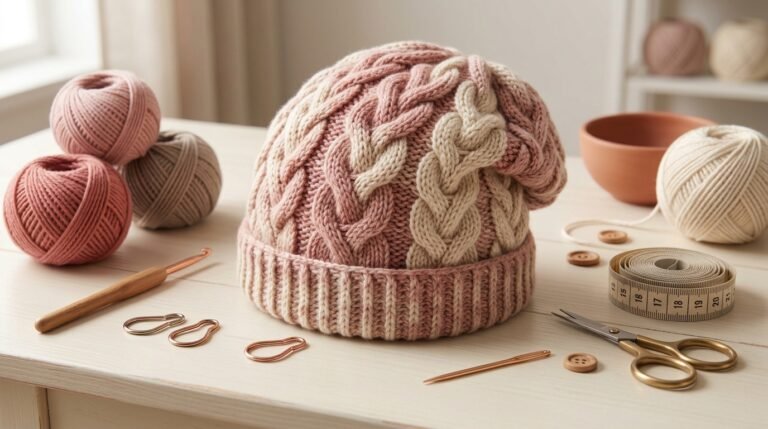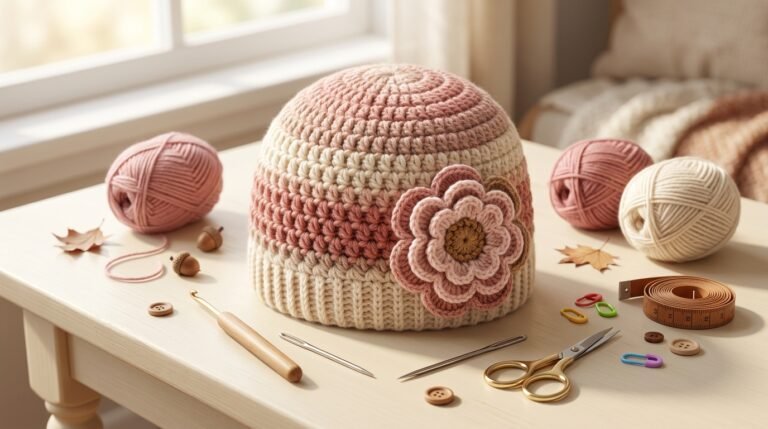

Isabel Slouchy Hat and Cowl Crochet Pattern: A Cozy Matching Set for Every Age
I have always had a soft spot for crochet accessories that can completely change the feel of an outfit without requiring a huge amount of yarn or weeks of work. A warm hat is useful, of course, but when it comes with a matching cowl, the whole project feels much more special.
That is exactly what makes the Isabel Slouchy Hat and Cowl such an appealing crochet project.
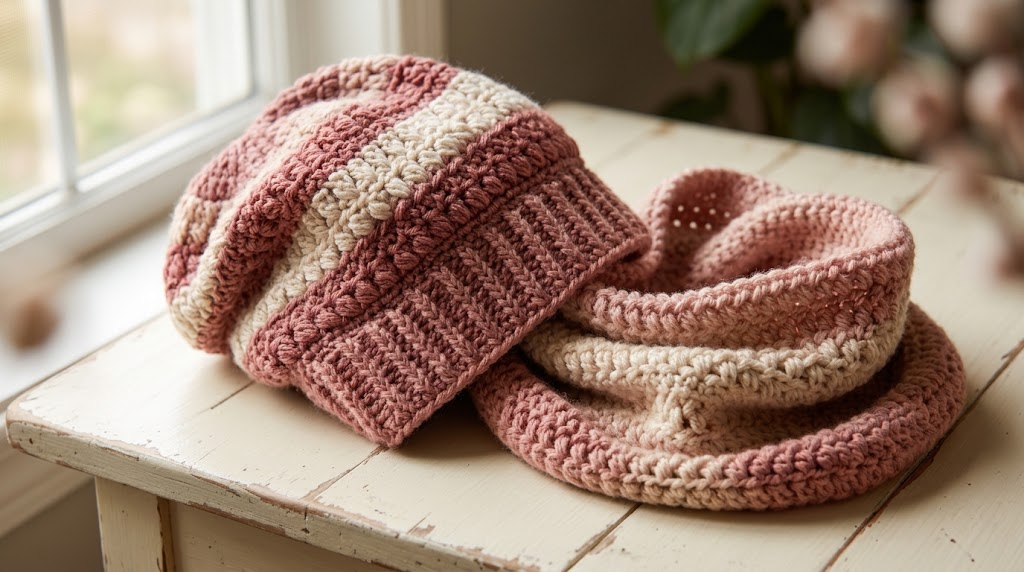
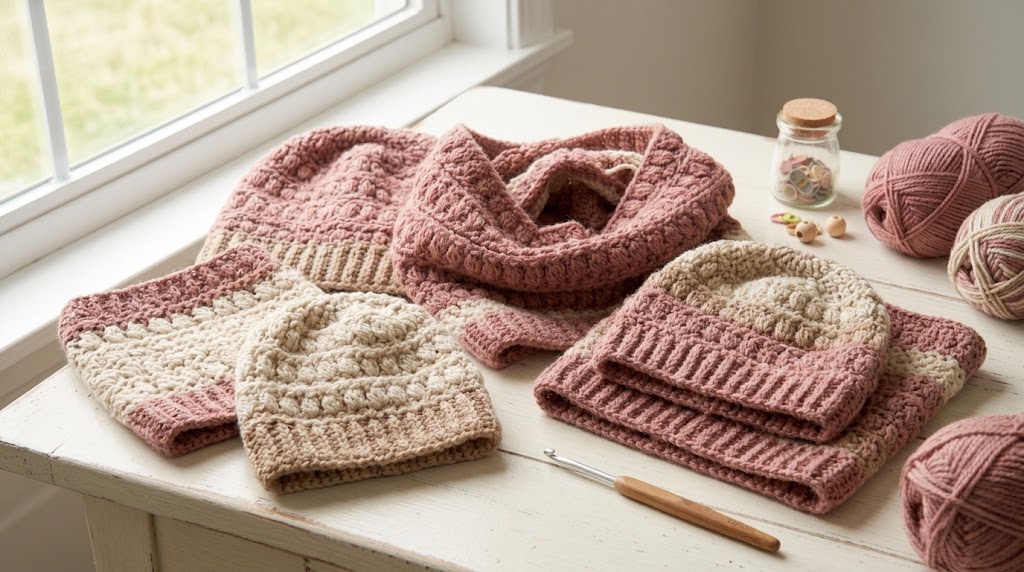
The original pattern is designed as a coordinated set, with slouchy hats available in sizes ranging from 3 months to women and matching cowl sizes from toddler through adult. It uses a textured stitch pattern that gives the finished accessories a distinctive handmade look rather than making them resemble ordinary store-bought winter accessories.
I especially like projects like this because they give me room to experiment with color while keeping the overall design coordinated.
You can make a matching hat and cowl for yourself, create a child-and-parent set, or crochet several versions as thoughtful handmade gifts.
Why I Love a Matching Crochet Hat and Cowl
A matching set has an advantage that individual accessories don’t always have: everything looks intentional.
You can wear the hat and cowl together on a cold day, but you can also use each piece separately.
For example, a slouchy crochet hat can work with a winter coat, sweater, or casual weekend outfit. The cowl can be worn with a different hat or even over a lightweight jacket.
That versatility makes the time spent crocheting the pair feel worthwhile.
The original designe describes the set as a cozy and stylish winter accessory and highlights the uniqueness of handmade crochet compared with mass-produced hats.
That handmade quality is one of the reasons I enjoy crochet so much.
Even when two people follow the same pattern, their finished pieces can look slightly different because of yarn choice, tension, color, and individual crochet style.
What You Need to Know About the Isabel Pattern
Before starting, I like to understand the basic requirements of a project.
According to the original pattern, the Isabel set includes:
- Slouchy hat sizes from 3 months through women
- Cowl sizes from toddler through adult
- Worsted-weight yarn, size 4
- G/4.25 mm crochet hook for the hat
- 7/4.5 mm crochet hook for the hat
- I/5.5 mm crochet hook for the cowl
- Standard American crochet terminology
The sample was made using Big Twist yarn in Cinnamon.
The combination of worsted yarn and different hook sizes is worth paying attention to because the hat and cowl need different levels of drape and structure.
Why Worsted-Weight Yarn Works So Well
Worsted-weight yarn is one of my favorite choices for crochet accessories.
It is substantial enough to create a warm fabric, but it isn’t so thick that the finished piece becomes excessively heavy.
For a slouchy hat, that balance is particularly useful.
You want enough body for the hat to hold its shape while still having enough flexibility to create the relaxed slouch.
For the cowl, you also want some drape so it can sit comfortably around the neck instead of feeling like a stiff tube.
The original Isabel pattern specifically calls for size 4 worsted-weight yarn.
For my first version of a pattern like this, I’d stay close to the recommended yarn category rather than experimenting immediately with chunky or lightweight yarn.
Once you understand how the original design behaves, then you can start thinking about substitutions.
Choosing the Right Color
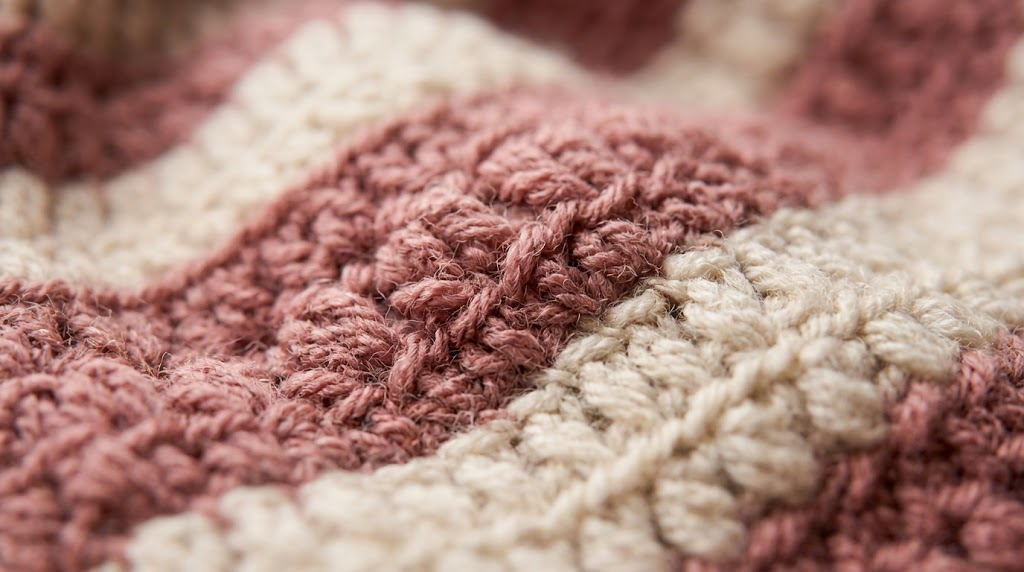
Color is where this project can become really personal.
The original sample uses a warm cinnamon shade, which is perfect for an autumn or winter aesthetic.
But there is no reason you have to copy that color.
Some combinations I’d love to try include:
Soft and Feminine
- Dusty rose
- Cream
- Warm beige
Classic Winter
- Charcoal
- Ivory
- Burgundy
Neutral Everyday
- Oatmeal
- Taupe
- Soft brown
Cool Winter
- Deep blue
- Light gray
- Cream
Playful Child’s Set
- Blush pink
- White
- Soft lavender
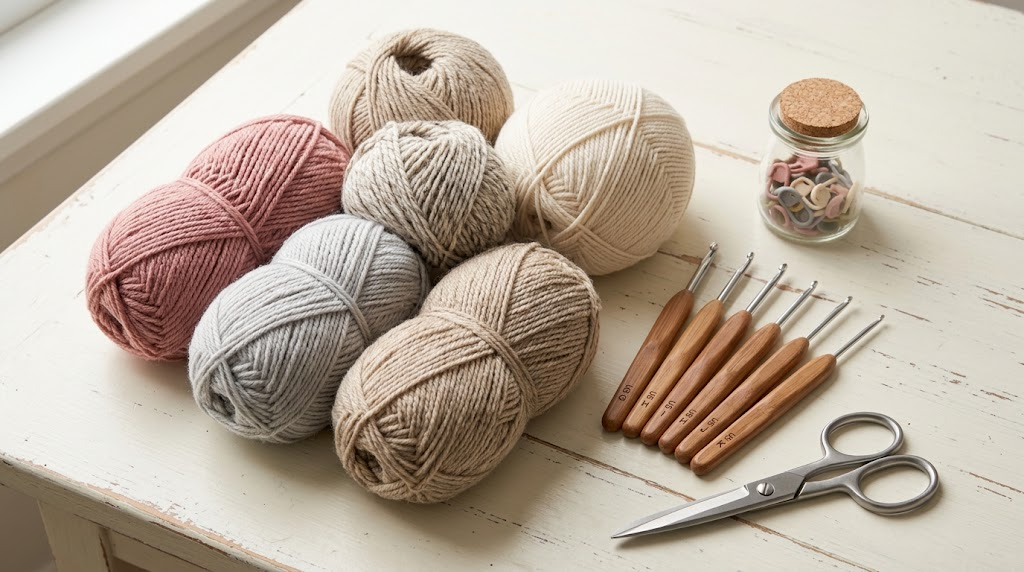
One of my favorite ways to choose yarn colors is to put the skeins next to each other in natural daylight.
Indoor lighting can make colors appear warmer or cooler than they really are.
A quick photograph can also help you see whether the colors have enough contrast.
Understanding the Hat’s Slouchy Shape
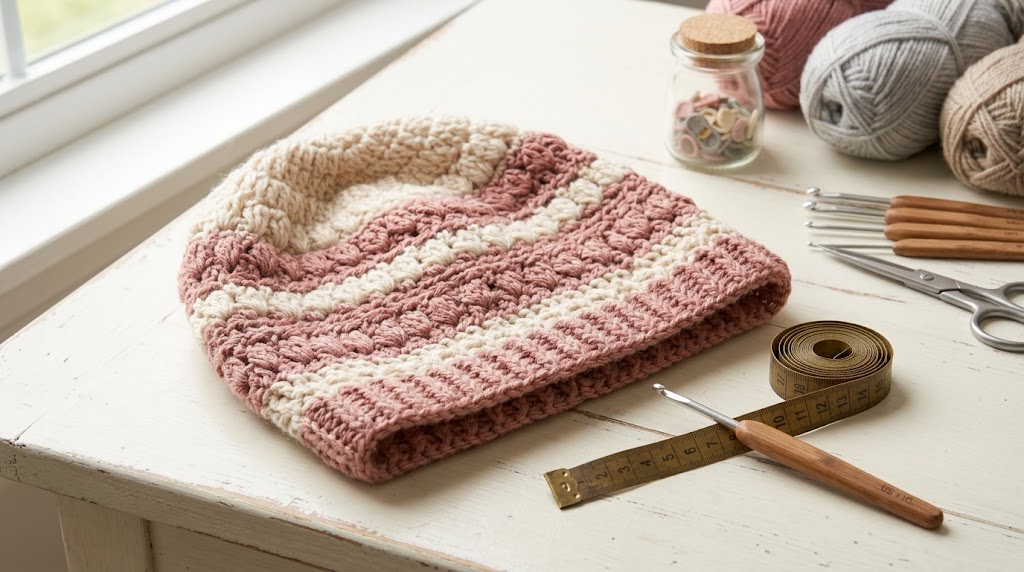
A slouchy hat isn’t supposed to fit like a tight beanie.
The extra fabric at the top is part of the design.
That’s what creates the relaxed shape.
But there is a fine line between a beautiful slouch and a hat that simply looks too large.
This is where gauge and sizing become important.
The original Isabel hat pattern is worked with different hook sizes, using 4.25 mm and 4.5 mm hooks.
Don’t assume that changing your hook by a small amount won’t matter.
Even a small hook-size difference can affect circumference, height, stitch density, and the amount of slouch.
Why I Always Check Gauge
Gauge isn’t the most exciting part of crochet.
I’ll admit that.
When I have a new project in front of me, I’d much rather start making the actual hat.
But with fitted accessories, gauge can save you from a lot of frustration.
If your stitches are tighter than the designer’s:
- The hat may be smaller.
- The fabric may feel stiffer.
- The slouch may be reduced.
If your stitches are looser:
- The hat may become larger.
- The fabric may have more drape.
- The slouch may become more pronounced.
The same principle applies to the cowl.
Since the original pattern uses a larger 5.5 mm hook for the cowl, the finished fabric is intended to have different characteristics from the hat.
The Importance of Using the Correct Hook
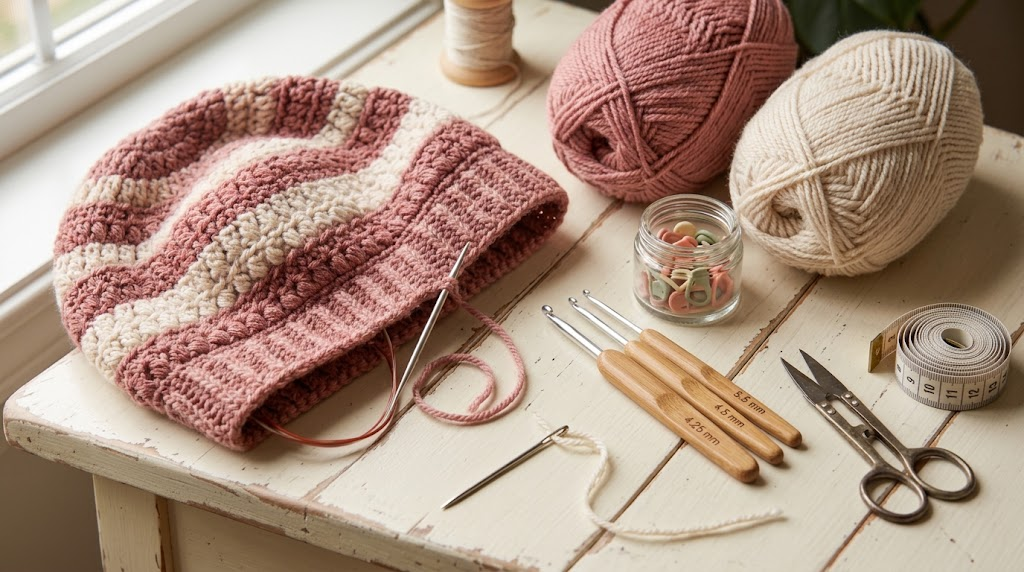
This project uses three hook sizes:
4.25 mm and 4.5 mm for the hats
5.5 mm for the cowl
That makes it a good project for someone who wants to build confidence using different hook sizes.
I recommend putting all three hooks beside your yarn before you begin.
It sounds like a tiny organizational trick, but it prevents one of the easiest crochet mistakes: grabbing the wrong hook because it happens to be sitting closest to you.
If you’re working while watching television or chatting with family, this becomes even more useful.
How I Would Approach the Hat
I wouldn’t rush through the hat simply because it is a relatively small accessory.
I’d break the project into stages.
Step 1: Decide the Size
The pattern includes sizes from 3 months through women.
Choose the size based on the intended wearer’s head measurements whenever possible.
For a baby or child, age ranges can provide a starting point, but actual measurements are more reliable.
Step 2: Choose the Yarn
Start with a worsted-weight yarn that has good stitch definition.
For a textured design, avoid extremely fuzzy yarn because it can hide the stitch pattern.
Step 3: Make a Gauge Swatch
Use the hook size specified for the section you’re testing.
Compare your stitches with the designer’s gauge before committing to the full project.
Step 4: Work Slowly Through the Texture
If the stitch pattern is unfamiliar, don’t worry if your first few rows aren’t perfect.
Look at the shape of the stitches rather than trying to crochet quickly.
Step 5: Check the Shape
As the hat grows, check its proportions.
You want the finished piece to look intentionally slouchy rather than simply oversized.
What Makes the Cowl Different?
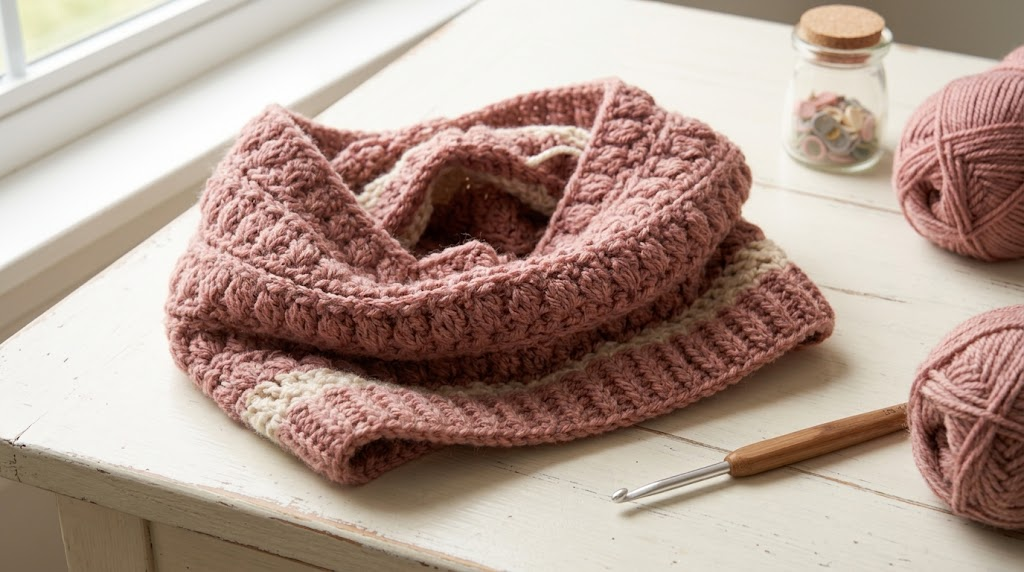
The cowl is where the larger hook becomes particularly important.
The original pattern uses an I/5.5 mm hook for the cowl.
A larger hook generally produces larger, more flexible stitches.
That’s useful for something worn around the neck because you want the fabric to have enough drape to sit comfortably.
A cowl that is too stiff can feel bulky.
A cowl with too much looseness can lose its shape.
The goal is somewhere in between.
This is why I wouldn’t automatically use the same hook for both pieces simply because you’re using the same yarn.
The designer selected different hook sizes for a reason.
Choosing the Right Cowl Size
The original Isabel pattern offers cowl sizes for:
- Toddler
- Child
- Teen
- Adult
That makes the set particularly useful for families.
You could make matching colors for everyone while adjusting the sizes appropriately.
I also think a matching adult-and-child set would make a lovely handmade holiday gift.
Instead of giving someone a single accessory, you’re giving them a coordinated little collection.
Making a Matching Family Set
This is one of my favorite ideas for this pattern.
Imagine making:
Mom: dusty rose hat + cream cowl
Child: cream hat + dusty rose cowl
Toddler: dusty rose hat + cream cowl
The colors don’t have to be identical.
In fact, using the same two colors in different proportions can make a family set look coordinated without making everyone look exactly the same.
This is also a good way to use leftover yarn.
If you’ve already crocheted a scarf or sweater in a particular color, you may be able to coordinate the hat and cowl with it.
Two Amazon Crochet Tools I’d Consider
I don’t think you need dozens of special gadgets to make this project.
For me, the most useful purchases are tools that can be reused on many crochet projects.
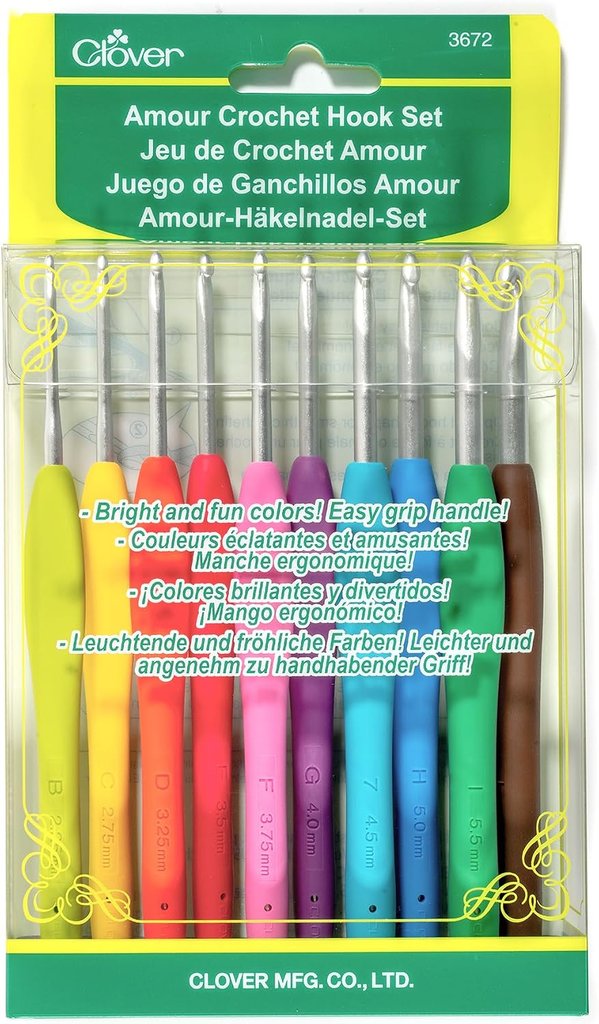
1. Clover Amour Crochet Hook Set
Because the Isabel pattern uses 4.25 mm, 4.5 mm, and 5.5 mm hooks, having a range of ergonomic crochet hooks can be convenient.
The Clover Amour line is widely used for crochet and is available in multiple hook sizes.
I particularly like the idea of having the sizes together because it makes projects involving multiple hooks easier to organize.
For this pattern, I would specifically make sure the set or individual hooks you purchase includes the required sizes.
Why I think it’s useful:
- Comfortable grip
- Easy-to-identify sizes
- Useful across many crochet projects
- Helpful when switching hook sizes
- Good option for someone building a crochet toolkit
If you already own comfortable hooks in the correct sizes, however, there is no reason to replace them simply for this project.
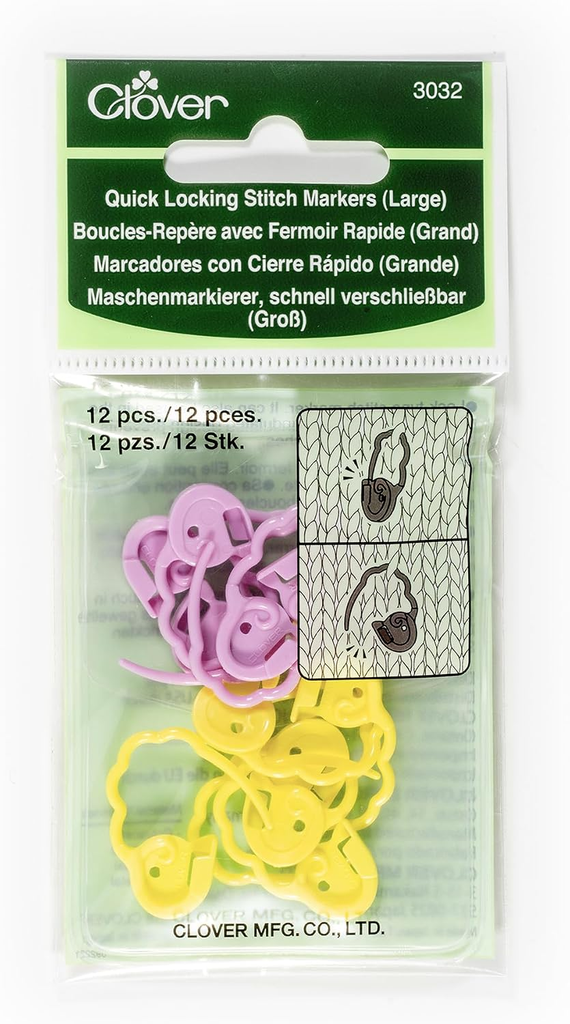
2. Clover Locking Stitch Markers
The second item I’d keep in my crochet kit is a set of locking stitch markers.
These are useful whenever I need to mark a particular stitch, keep track of a round, or identify an important location while shaping a project.
I prefer locking-style markers because they attach securely to the stitch and can be moved as the project grows.
They are also reusable, which makes them a practical purchase rather than a single-project accessory.
Why they’re helpful here:
- Useful for keeping track of rounds
- Easy to move
- Helpful when shaping
- Reusable
- Small enough to keep in your project bag
Amazon sellers, pricing, colors, and availability can change, so check the current listing before buying.
Avoiding Common Slouchy Hat Problems
My hat doesn’t have enough slouch.
First, check your measurements and gauge.
Your fabric may be tighter than the intended gauge, or the hat may need more height for the desired silhouette.
Don’t immediately make dramatic changes to the pattern.
Check the basics first.
My hat looks too loose.
Again, start with gauge.
If your stitches are significantly larger than intended, your hat may be wider or taller than expected.
My texture isn’t visible.
Yarn choice matters.
Very fuzzy yarn can hide textured stitches.
For your first version, choose yarn with clear stitch definition.
My cowl feels stiff.
Check whether you accidentally used the smaller hat hook.
The original pattern uses a larger 5.5 mm hook for the cowl, which contributes to the cowl’s different fabric characteristics.
My hat and cowl don’t look like a matching set.
Try coordinating the colors more intentionally.
They don’t need to be identical, but repeating one color between both pieces can create a visual connection.
Why Handmade Texture Matters
One thing I appreciate about this pattern is that it doesn’t depend on complicated decoration.
The stitch texture itself provides much of the visual interest.
That’s a valuable lesson for crochet design.
You don’t need to attach flowers, buttons, bows, or other embellishments to every project.
Sometimes beautiful yarn plus an interesting stitch is enough.
When I look at handmade accessories, I often notice texture before anything else.
A well-defined crochet stitch can make a simple neutral color look sophisticated.
That’s why I’d recommend choosing yarn with good stitch definition rather than focusing only on the color.
How I Would Style the Finished Set
A dusty-rose Isabel hat and cowl would look lovely with a cream sweater and jeans.
A charcoal version would be easy to wear with almost any winter coat.
For children, brighter colors can make the set more playful.
For a gift, neutral shades such as cream, oatmeal, taupe, or soft gray are safer choices when you’re unsure about someone’s personal style.
And because the pattern spans several age groups, you can create coordinated sets without necessarily making every piece identical.
Is This a Good Beginner Crochet Project?
I would say it can be a good choice for a crocheter who already understands basic stitches and wants to practice working with texture and shaping.
A complete beginner may need a little extra time to understand the stitch pattern, gauge, and sizing.
But you don’t need to be an advanced crocheter to make something like this.
My recommendation is to take the project slowly.
Don’t measure your success by how quickly you finish.
Instead, focus on making your stitches consistent.
Once your tension becomes more predictable, your finished accessories will usually become more consistent too.
A Simple Project Plan
If I were making this set for the first time, my workflow would look like this:
Day 1: Choose yarn and colors.
Day 2: Make gauge swatches and begin the hat.
Day 3: Finish the hat and check the fit.
Day 4: Start the cowl.
Day 5: Finish the cowl and weave in the ends.
You could obviously complete it much faster, but spreading the work out can make it feel more enjoyable rather than like a race.
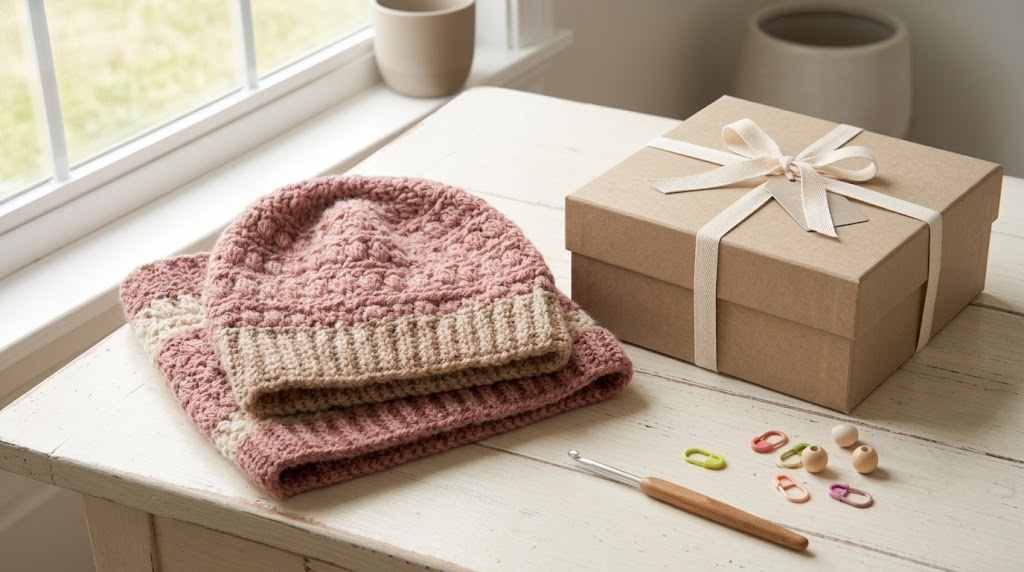
Why This Pattern Makes a Great Gift
Handmade accessories are especially nice gifts because they don’t feel generic.
A store-bought winter hat is useful, but a handmade hat and cowl can feel personal.
You chose the yarn specifically.
You spent time creating the stitches.
You selected the colors.
And you can customize the project around the recipient.
The wide hat sizing—from 3 months to women—and multiple cowl sizes make the pattern particularly flexible for gift-making.
You could make one for a newborn, another for a child, and a matching adult version.
That opens up plenty of possibilities for family photographs, holiday gifts, or handmade winter wardrobes.
Final Thoughts
The Isabel Slouchy Hat and Cowl is the kind of crochet project I would return to when I want something that feels both useful and special.
The matching design gives you two coordinated accessories, while the textured stitch pattern gives the finished pieces a handmade appearance that stands apart from basic store-bought winter hats.
The original pattern includes hat sizes from 3 months through women and cowl sizes from toddler through adult, making it especially versatile. It uses worsted-weight yarn, with 4.25 mm and 4.5 mm hooks for the hats and a 5.5 mm hook for the cowl.
If you’re planning to make the set, my biggest advice is to focus on gauge, yarn choice, and stitch definition.
Don’t rush through the beginning.
Take time to choose a yarn that shows the texture clearly.
And don’t be afraid to make the set your own with a new color combination.
That’s one of the best things about crochet: a pattern gives you the structure, but your yarn, tension, colors, and finishing choices are what give the finished piece its personality.