
Easy Crochet Poncho Pattern: A Cozy and Stylish Handmade Layer
A crochet poncho is one of those handmade pieces that combines comfort, style, and practicality. Whether you’re looking for an extra layer on a chilly morning, a cozy accessory for autumn, or a thoughtful handmade gift, a crochet poncho is a lovely project to add to your collection.
What I particularly like about ponchos is their relaxed shape. Unlike fitted sweaters, they don’t require complicated shaping around the waist or sleeves. Their loose construction makes them comfortable to wear over everyday outfits, and you can experiment with different yarn colors, stitch patterns, and decorative edges to create a design that reflects your personal style.
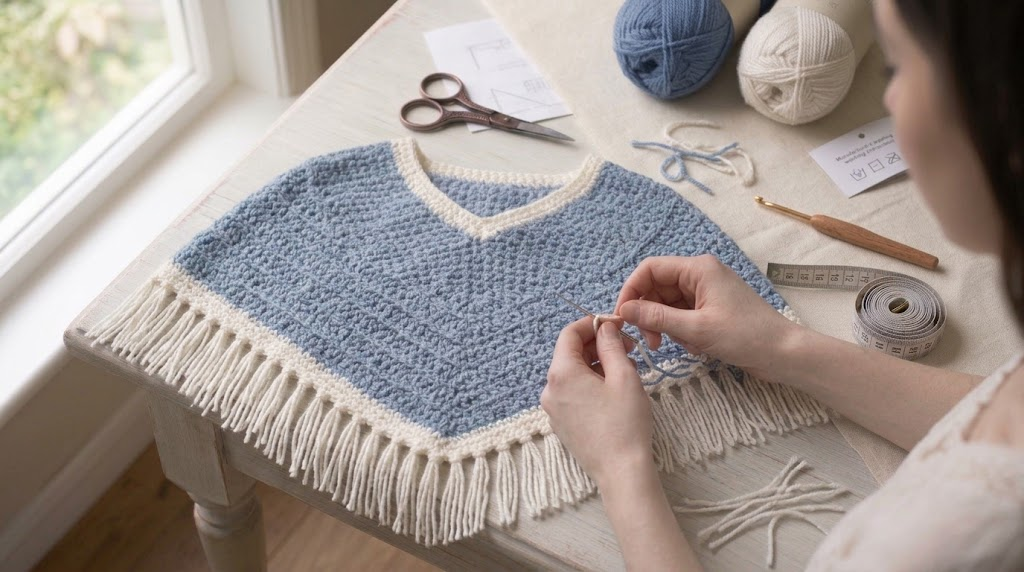
For this project, imagine a soft blue and off-white poncho with a simple stitch pattern, a comfortable drape, and a neat neckline. The combination feels fresh and timeless, making it suitable for casual outings, relaxing at home, or layering over a long-sleeved shirt.
Why You’ll Love This Crochet Poncho
1. Comfortable and Easy to Wear
One of the biggest advantages of a poncho is its relaxed fit. The fabric drapes over your shoulders and body without restricting movement.
You can wear it over a T-shirt, a fitted top, or a lightweight sweater. Depending on the yarn you choose, it can provide a little warmth during cool evenings or become a comfortable winter layering piece.
2. A Beginner-Friendly Garment Project
Many poncho designs are made from simple rectangular panels or geometric shapes. This construction can be easier to understand than a fitted sweater with separate sleeves and complicated shaping.
You will still need to pay attention to measurements, stitch consistency, and joining, but the overall construction is manageable if you already know basic crochet stitches.
3. Easy to Customize
A handmade poncho gives you plenty of opportunities to experiment.
You could create a solid-colored design, alternate two shades, add stripes, or finish the edges with a contrasting border. A blue and off-white combination is particularly attractive because it creates a clean, classic appearance without looking too busy.
You can also adjust the length to make a short shoulder wrap or a longer poncho that provides more coverage.
Materials You’ll Need
Before starting, gather your supplies so you can work comfortably without unnecessary interruptions.
Yarn: Choose a suitable yarn weight for your intended design. Medium-weight yarn is a practical option for a cozy poncho, while lighter yarn can create a softer drape.
Crochet hook: Use the hook size recommended for your chosen yarn and pattern. The correct size helps you achieve a balanced fabric that isn’t excessively stiff or loose.
Scissors: Sharp scissors make it easier to trim yarn ends neatly.
Yarn needle: A blunt, large-eye needle is useful for joining panels and weaving in loose ends.
Measuring tape: This helps you check the width, length, and neckline as you work.
Stitch markers: These are optional but useful for marking corners, panel edges, and neckline positions.
For the blue and off-white version, select one main shade and one contrasting shade. You can use blue for the main body and off-white for stripes or the border, or reverse the arrangement for a lighter overall appearance.

Two Helpful Amazon Product Recommendations
You don’t need a large collection of expensive supplies to crochet a poncho. I would prioritize yarn that feels comfortable and a hook that allows you to maintain consistent stitches.
1. Medium-Weight Yarn
Medium-weight yarn, often labeled category 4, is a versatile choice for many crochet ponchos.
For this design, look for a smooth blue yarn and a matching off-white shade. A yarn with good stitch definition will help the pattern stand out, while a soft fiber can make the finished garment more comfortable against your clothing.
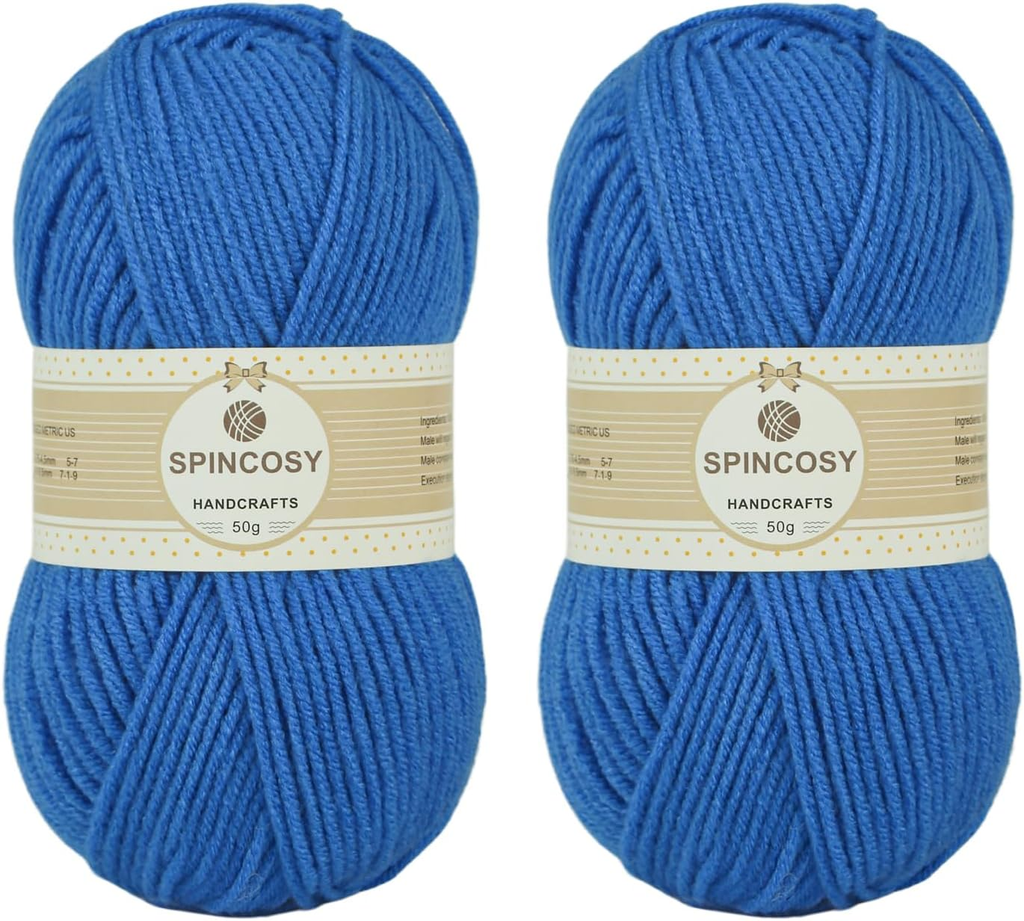
Before buying, check the yarn label for its recommended hook size, washing instructions, and yardage. Buying enough yarn from the same dye lot can help prevent noticeable color differences.
2. Ergonomic Crochet Hook
A comfortable crochet hook can make a difference when working on a garment that requires many repeated stitches.
An ergonomic hook with a comfortable handle may be particularly useful if you prefer a softer grip. However, comfort is personal, so consider the handle shape and material before choosing one.

Select the hook size recommended by your pattern, then make a small gauge swatch to see whether your stitches produce the intended fabric.
Understanding the Crochet Poncho Construction
A poncho can be constructed in several ways. Some patterns use two rectangular panels joined together, while others use a seamless top-down construction or a single large geometric piece.
The exact method depends on the pattern you’re following.
The Main Body
For a simple two-panel poncho, the main body consists of two crocheted rectangles.
Each rectangle forms part of the front or back of the garment. The fabric can be worked in single crochet, half-double crochet, double crochet, or a textured stitch pattern.
When making the panels, keep the width and length consistent. Uneven panels can cause the garment to twist or hang awkwardly after joining.
The Neckline
The neckline opening determines how comfortably the poncho sits around your shoulders.
When joining two panels, leave the required opening for your head. Avoid making the opening too small, as this can make the garment difficult to put on and take off.
A simple neckline can be finished with a few rounds of single crochet for a neat edge.
The Edges and Border
The border gives the poncho a more finished appearance.
You can use a simple single-crochet border, a row of half-double crochet, or a contrasting stripe. An off-white border around a blue poncho creates a clean, coordinated finish.
Keep your border stitches evenly spaced. Too many stitches can make the edge ruffle, while too few can cause it to pull inward.
Step-by-Step Guide to Making a Simple Crochet Poncho
The following steps describe a basic two-panel construction. They are a general construction guide rather than a substitute for a specific pattern’s stitch counts and measurements.
Step 1: Take Your Measurements
Decide how long you want the poncho to be and how much coverage you prefer around your shoulders.
Measure from your shoulder toward the desired hemline. Consider how the garment will sit over your usual clothing.
Write down your measurements before crocheting so you have a clear target for the panels.

Step 2: Make a Gauge Swatch
Create a small sample using your chosen yarn, hook, and stitch pattern.
Measure the sample after finishing it. If your stitches are too tight, you may need a larger hook; if they’re too loose, a smaller hook may help.
Gauge matters because even a small difference in stitch size can change the width and length of a garment.

Step 3: Crochet the First Panel
Follow your chosen pattern to create the first rectangular panel.
Work each row consistently, checking the stitch count when necessary. If you’re adding stripes, change colors according to your planned sequence.
Keep the edges straight by avoiding accidental increases or skipped stitches.

Step 4: Make the Second Panel
Repeat the construction process for the second panel.
Compare both pieces before joining them. Their widths, lengths, and stitch patterns should match unless the pattern specifies otherwise.
If the panels differ significantly, correct the difference before proceeding.

Step 5: Join the Panels
Lay the panels flat and position them according to your pattern’s instructions.
Join the appropriate edges using a yarn needle or crochet slip stitches. Leave the specified neckline opening.
Try the poncho on carefully, if practical, to check the neckline and overall drape before completing the remaining joins.

Step 6: Add the Border
Work around the lower edges and neckline as directed by your design.
For a blue and off-white poncho, a contrasting off-white border can tie the colors together.
Count stitches around corners and distribute them evenly along row ends to prevent unwanted puckering or ruffling.
Step 7: Finish and Shape
Weave in all loose yarn ends using a yarn needle.
Check the seams, neckline, and border for loose stitches. Gently shape the poncho and follow the yarn manufacturer’s washing and drying instructions.
Blocking may help improve the drape and even out the edges if the yarn is suitable for that treatment.

Tips for a Beautiful Finished Poncho
Choose yarn with the right drape. Very stiff yarn can make a poncho stand away from the body, while a softer yarn often produces a more fluid shape.
Check your measurements regularly. Lay your work flat as it grows so you can catch size differences early.
Keep color changes neat. When working blue and off-white stripes, secure yarn ends carefully and avoid pulling the stitches too tightly at color changes.
Think about the season. A lightweight poncho is useful for spring and cool summer evenings, while a thicker yarn can create a warmer winter accessory.
Finish the neckline carefully. A neat neckline improves both comfort and appearance.
Creative Ways to Customize Your Poncho
Classic Blue and Off-White
Use blue for the main body and off-white for the neckline and hem. This combination creates a clean, timeless look.
Soft Striped Poncho
Alternate blue and off-white rows to create a simple striped design. Keep the stripe widths consistent for a balanced appearance.
Textured Crochet Poncho
Choose a stitch pattern that creates raised ridges or a woven appearance. A single color can be enough to highlight the texture.
Cozy Oversized Poncho
Increase the panel dimensions to create a more relaxed fit. Remember that changing the size may also affect the amount of yarn required.

Frequently Asked Questions
Is a Crochet Poncho Suitable for Beginners?
Yes, many poncho patterns are suitable for beginners who understand basic crochet stitches. A simple panel construction is often easier to manage than a fitted garment.
How Much Yarn Do I Need?
The amount depends on the pattern, yarn weight, garment dimensions, and stitch pattern. Check the specified yardage before purchasing your yarn.
Can I Use Two Colors?
Absolutely. Blue and off-white work well together, but you can choose any contrasting colors that suit your style.
How Do I Make My Poncho Longer?
Increase the length of the panels according to your desired measurements. Keep in mind that a longer poncho requires additional yarn and may change the overall proportions.
How Should I Wash a Crochet Poncho?
Always follow the care instructions on the yarn label. Some yarns can be machine-washed, while others require gentle handwashing and flat drying.
Final Thoughts
A crochet poncho is a versatile handmade garment that combines comfort, creativity, and everyday style. With a simple construction, carefully chosen yarn, and a little patience, you can create a piece that reflects your preferred colors and fit.
I especially like the blue and off-white combination because it feels fresh, understated, and easy to coordinate with everyday clothing.
Take your time with the gauge, measurements, joining, and finishing. These details help transform a collection of crocheted stitches into a comfortable garment you can enjoy wearing or give as a thoughtful handmade present.