Right Crochet Hook and Yarn for Every Crochet Project Beginner Approach
If there is one thing I wish every new crocheter understood, it is this: the yarn and hook you choose can completely change how your finished project looks and feels.
When I first started paying closer attention to crochet supplies, I thought choosing yarn was mostly about finding a color I liked. Then I learned that yarn weight, fiber, hook size and tension all work together.
That little lesson changed the way I approach crochet projects.
A beautiful yarn can still produce a disappointing result if it isn’t suitable for the pattern. Likewise, the perfect hook size can make your stitches much easier to control.
So today, I want to make this process simple.
Whether you’re making a blanket, bag, sweater, hat or beginner granny square, here’s how I choose the right combination.
Start With the Pattern
Before buying anything, I always recommend looking at the pattern first.
A good crochet pattern usually tells you the recommended yarn weight and hook size.
For example, one Crochet Dreamz bag pattern specifies worsted-weight 100% cotton yarn and a 4 mm hook, while another crossbody bag uses bulky yarn with 5–5.5 mm hooks.
That difference is important.
You can’t simply use the same hook for every project and expect the same result.
My first rule is therefore:
Follow the pattern’s recommended yarn and hook before experimenting.
Once you understand how they work together, you can start making your own adjustments.
Understanding Yarn Weight
Yarn comes in different weights, from very fine yarn to extremely bulky yarn.
You don’t need to memorize every yarn category immediately.
Instead, think about what you’re making.
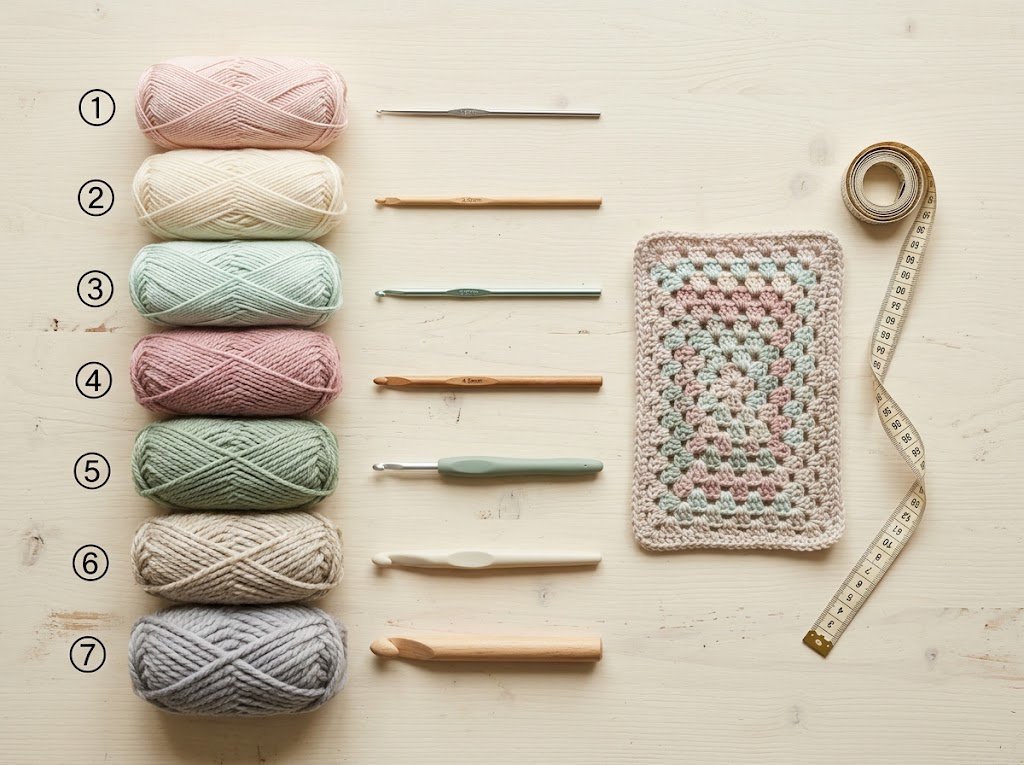
For delicate accessories, lightweight yarn can be useful.
For blankets, baskets, bags and cozy winter projects, medium or bulky yarn is often more practical.
The pattern should tell you which weight to choose.
I also pay attention to the fiber.
Cotton
Cotton is one of my favorite choices for projects where structure matters.
It can work beautifully for:
- Bags
- Dishcloths
- Baskets
- Summer accessories
- Home decor
Crochet Dreamz, for example, uses 100% cotton yarn in one of its beginner-friendly bag patterns.
Acrylic
Acrylic is popular because it is generally affordable and available in a huge range of colors.
It’s a convenient choice for many blankets, scarves, hats and beginner projects.
Wool and wool blends
These can be excellent for warm clothing and winter accessories.
However, always consider the person who will use the finished item. Some people find wool itchy, so fiber choice matters as much as color.
How Hook Size Changes Your Crochet
Here’s where things get interesting.
A larger hook generally creates larger, more open stitches.
A smaller hook generally produces tighter stitches.
Neither is automatically better.
It depends on the result you’re trying to achieve.
If you’re making a structured bag, you may want fabric that doesn’t feel too loose.
If you’re making a lightweight shawl, you may prefer a more open fabric.
That’s why I don’t recommend randomly changing hook sizes simply because you like the look of a particular hook.
Change the hook because you understand what that change will do to your fabric.
My Amazon Pick: Clover Amour Crochet Hooks
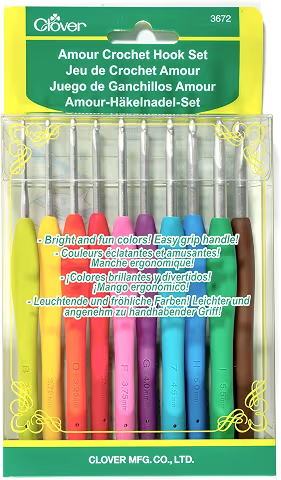
If I were building a crochet hook collection today, the Clover Amour Crochet Hook Set would be one of the first ergonomic sets I’d consider.
Clover says the handles use a soft, non-slip elastomer material and are shaped to provide a comfortable grip. The 10-size set covers B through J, or 2.25 through 6 mm.
What I like about this recommendation is that it isn’t simply a huge mystery kit containing dozens of accessories.
You get a recognizable hook range that covers many common crochet sizes.
I also like that the individual handles use different colors, making it easier to identify sizes quickly.
The downside?
Price.
A beginner who has only just picked up crochet doesn’t necessarily need an expensive hook collection.
If you’re still deciding whether crochet is for you, one inexpensive hook may be enough.
But if you already crochet regularly and find yourself working on different yarn weights, a quality multi-size set becomes much easier to justify.
Don’t Ignore Your Tension
Even with the correct yarn and hook, your finished project can still come out differently from the pattern.
Why?
Tension.
Two people can use exactly the same yarn and hook but create slightly different stitches because one person crochets tightly and the other works more loosely.
This is why gauge matters.
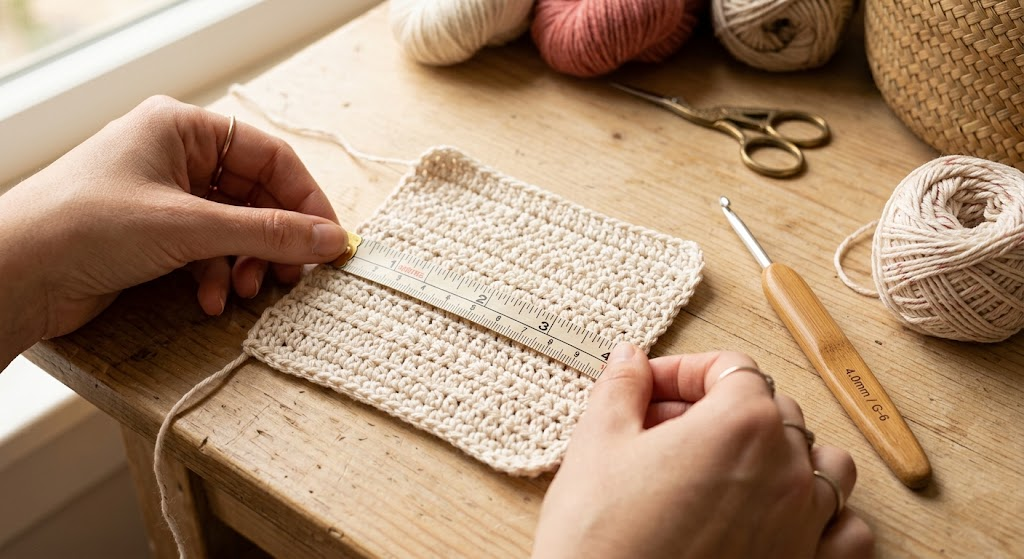
If a pattern gives you a gauge measurement, make a small swatch before starting the entire project.
I know it can feel boring.
I’d much rather start crocheting the actual project too.
But spending a few minutes checking gauge can save you from finishing a sweater and discovering it doesn’t fit.
When Should You Change Hook Size?
Suppose you make your gauge swatch and it’s smaller than the dimensions in the pattern.
You may need to try a larger hook.
If your stitches are too loose and your swatch is coming out larger, you may need a smaller hook.
But don’t change hook size blindly.
Look at the pattern instructions and understand what gauge you’re trying to reach.
That’s especially important for wearable projects.
For a scarf or decorative item, a small difference may not matter much.
For a sweater, hat or fitted garment, it can matter considerably.
A Small Tool That Saves Me From Counting Problems
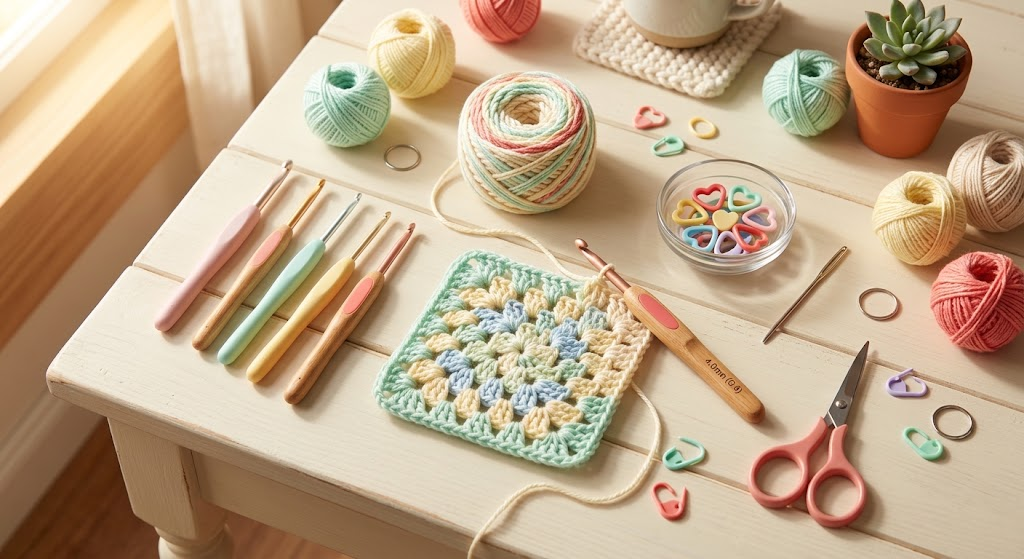
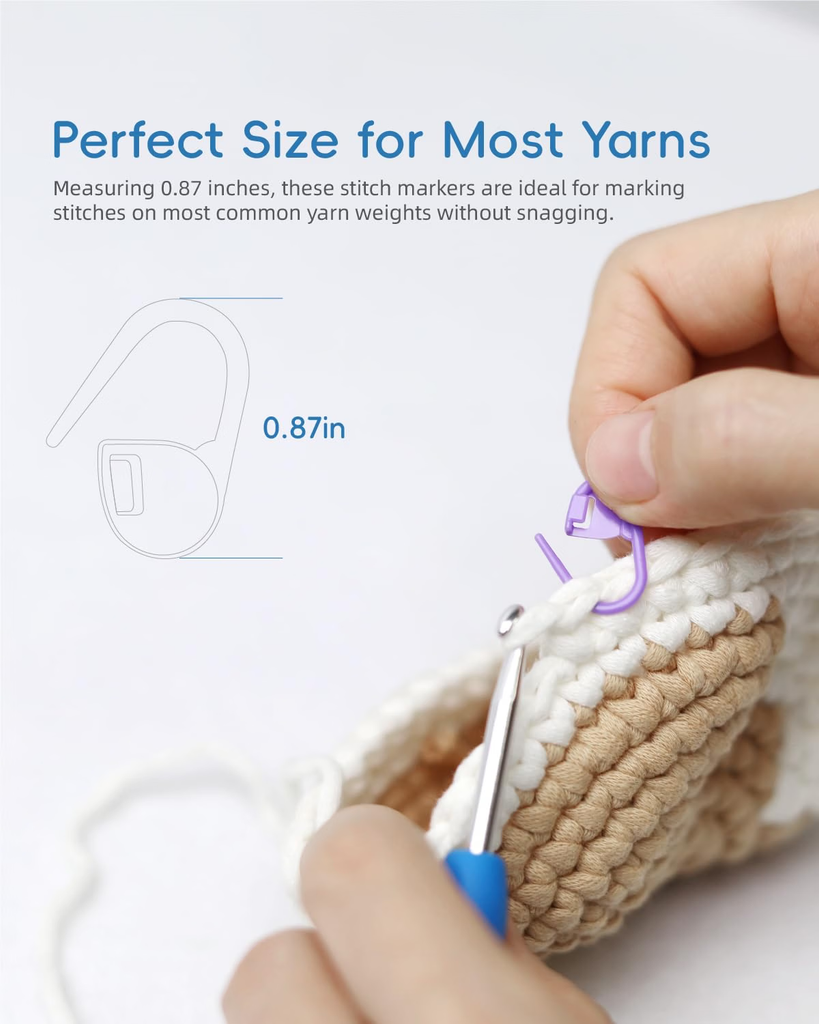
The second tool I recommend for beginners is locking stitch markers.
These are inexpensive, but they can make complicated patterns much easier to follow.
I like them for marking:
- The beginning of rounds
- Increase points
- Decrease points
- Pattern repeats
- Important stitches
Crochet Dreamz also includes locking stitch markers or safety pins among the materials for one of its crochet bag patterns.
You don’t need a huge collection.
A small set is enough to start.
My Simple Yarn-and-Hook Formula
When I’m deciding what combination to use, I keep the process simple:
1. Check the pattern.
Find the recommended yarn weight and hook size.
2. Choose the fiber based on the project.
Cotton for structure, acrylic for affordable everyday projects, and wool or blends for warmth are useful starting points.
3. Make a gauge swatch when size matters.
Especially for clothing.
4. Adjust the hook if necessary.
Use your gauge rather than guessing.
5. Think about the finished fabric.
Ask yourself whether you want it soft, stiff, loose, dense, drapey or structured.
That last question is often overlooked.
Crochet isn’t only about getting the correct number of stitches.
It’s also about creating the right fabric.
Don’t Feel Like You Need Everything
One of my biggest pieces of advice for beginners is not to overbuy.
You don’t need twenty yarn types, thirty hooks and every crochet gadget available online.
Start with a few useful supplies.
A comfortable hook, suitable yarn, scissors, a yarn needle, measuring tape and a few stitch markers can take you through an enormous number of projects.
Then buy more when a project gives you a reason.
That’s how I think about crochet tools: they should solve problems, not create clutter.
Final Thoughts
Choosing crochet yarn and hooks becomes much easier once you understand the relationship between them.
Start with the pattern.
Check the recommended yarn weight and hook.
Think about the fiber and the type of fabric you want.
And when the finished size matters, make a gauge swatch.
If you’re ready to upgrade your basic tools, the Clover Amour hook set is a strong option to investigate, while a simple set of locking stitch markers is an inexpensive addition that can make pattern-following easier.
Just remember that the “best” crochet tool isn’t necessarily the most expensive one.
The best tool is the one that feels comfortable in your hands and helps you enjoy making things.
And honestly, that’s what keeps me coming back to crochet.
There is something wonderfully satisfying about starting with a ball of yarn and a hook and slowly turning it into something useful, beautiful and completely your own.
Happy crocheting! 🧶