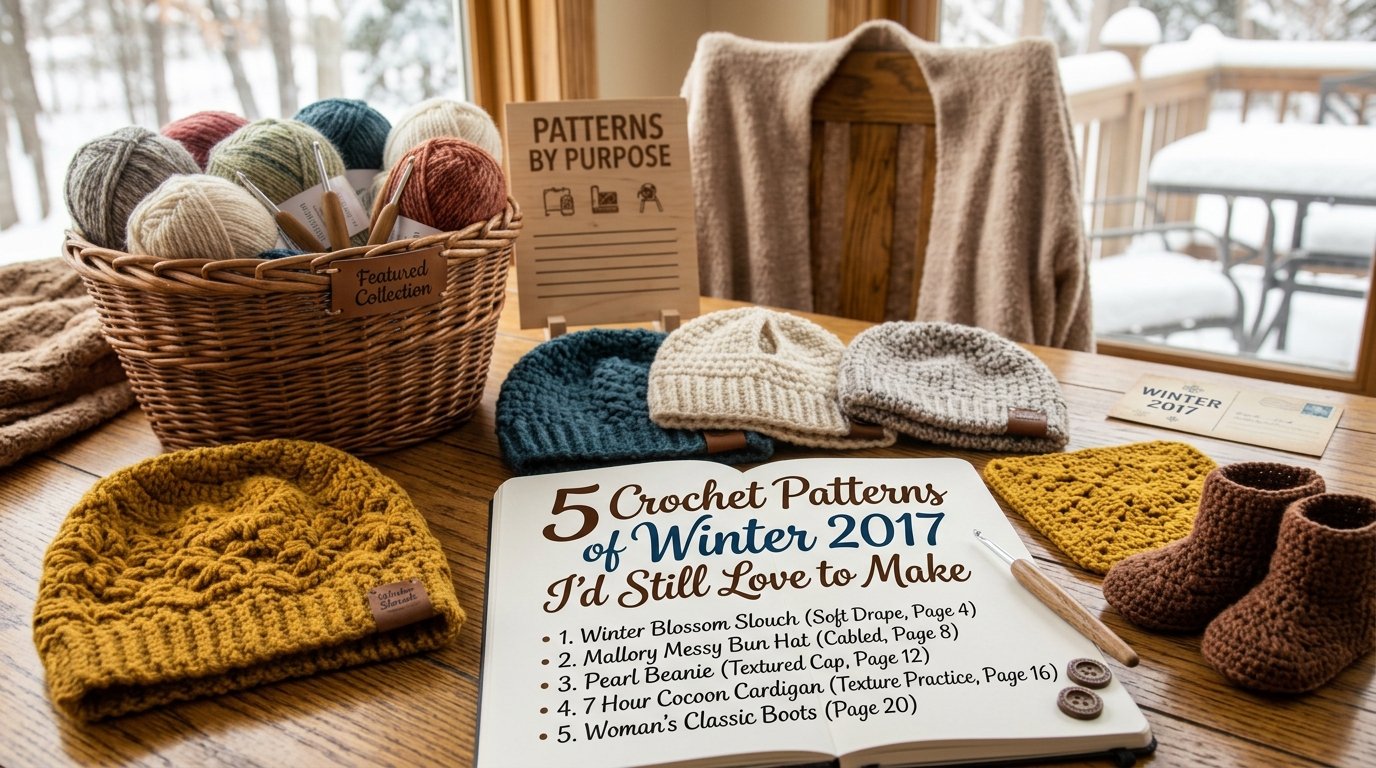
5 Crochet Patterns of Winter I’d Still Love to Make
Winter is one of my favorite seasons for crochet because it gives me a good excuse to reach for cozy yarn, textured stitches, warm accessories, and comfortable handmade clothing. A cold day and a basket of yarn can be all the motivation I need to start a new project.
I recently revisited “Top 5 Crochet Patterns of Winter,” and what stood out to me is how different the five projects are. The collection includes Woman’s Classic Boots, the Mallory Messy Bun or Slouch Hat, the Pearl Beanie, the 7 Hour Cocoon Cardigan, and the Winter Blossom Slouch.
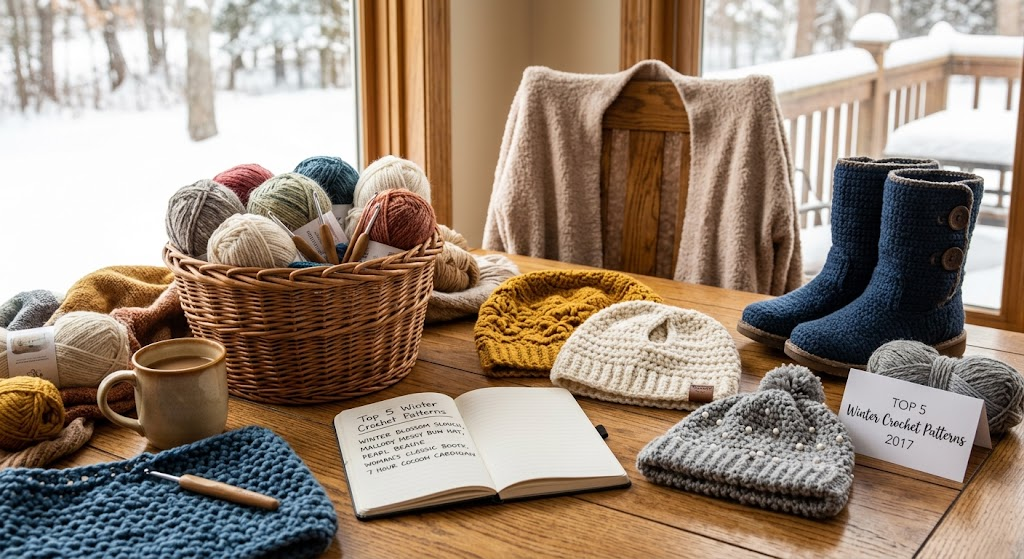
Rather than simply listing those designs, I want to look at what makes each one interesting, what type of crocheter might enjoy it, and what I would keep in mind before starting.
The original roundup also reflects reader interest at the time, mentioning strong responses to several of the designs, including the Mallory hat and Pearl Beanie.
So grab your favorite hook and yarn, and let’s explore these five winter crochet ideas.
1. Woman’s Classic Crochet Boots
Crochet boots are one of those projects that immediately make winter crochet feel practical.
The Woman’s Classic Boots were the first pattern featured in the original winter roundup. The design was offered in sizes ranging from baby to adult because of its popularity.
What I like about this idea is that it takes crochet beyond scarves and hats.
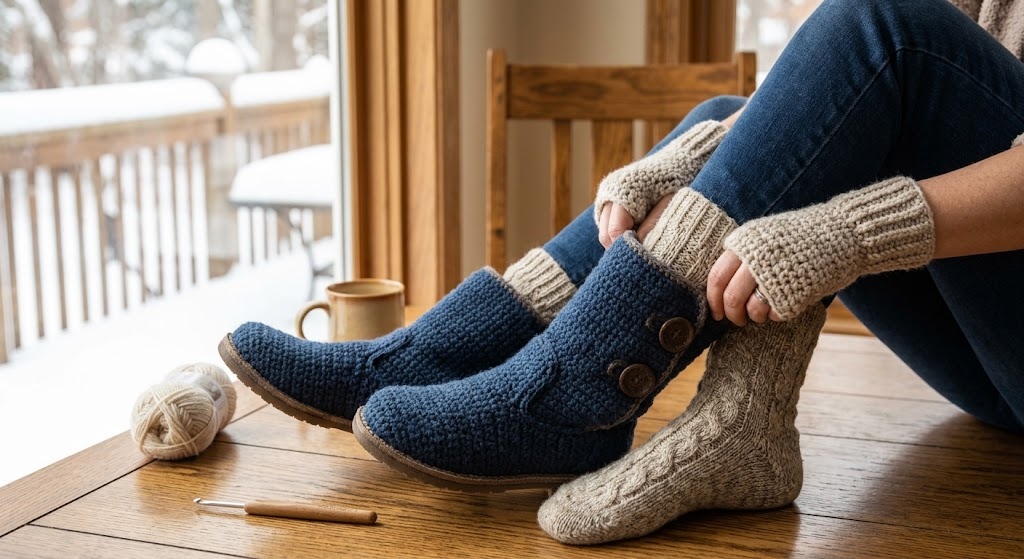
Instead of simply making something decorative, you’re creating something that can become part of a cozy winter outfit.
Why I like the concept
Crochet footwear can be particularly satisfying because you can customize the colors and decorative details.
For example, I could imagine making a neutral pair in:
- Cream
- Beige
- Soft gray
- Chocolate brown
- Dusty rose
Or I could make the upper portion colorful while keeping the sole and trim neutral.
The important thing with crochet footwear is that fit and construction matter more than appearance alone. Feet put much more stress on a project than a hat or scarf, so the sole and stitching need to be appropriate for the intended use.
For indoor slippers or boot-style house shoes, crochet can be especially appealing.
My tip
If you’re making crochet footwear for the first time, measure carefully rather than assuming your usual shoe size will automatically translate to the pattern.
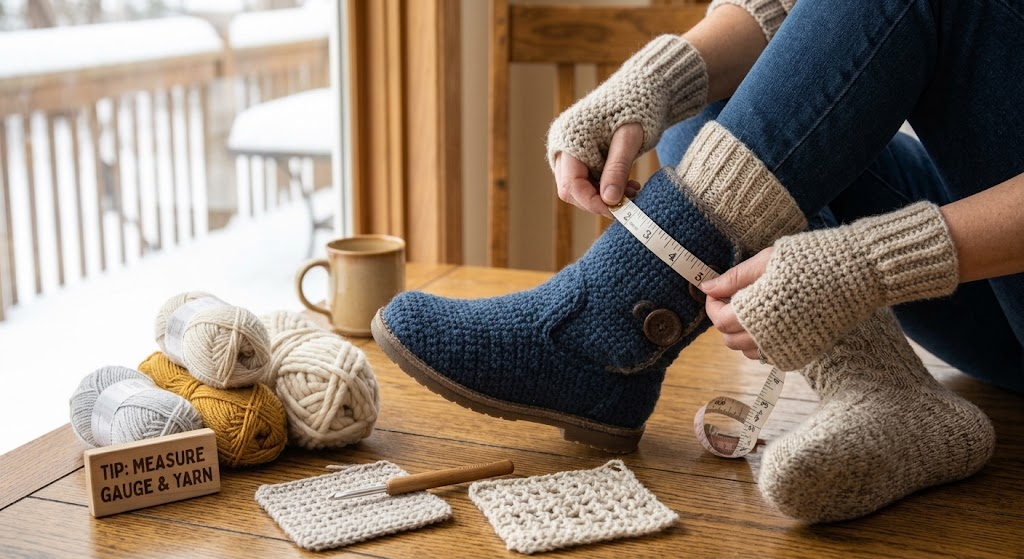
Also consider the thickness of the yarn and the amount of stretch in the finished fabric.
A small difference in gauge can noticeably change the fit.
2. Mallory Messy Bun or Slouch Hat
The second design in the roundup is the Mallory Messy Bun or Slouch Hat.
This one caught my attention because it offers two different styling possibilities. Crochet Dreamz describes the pattern as having both a messy-bun option and a slouch-hat option, along with button detailing.
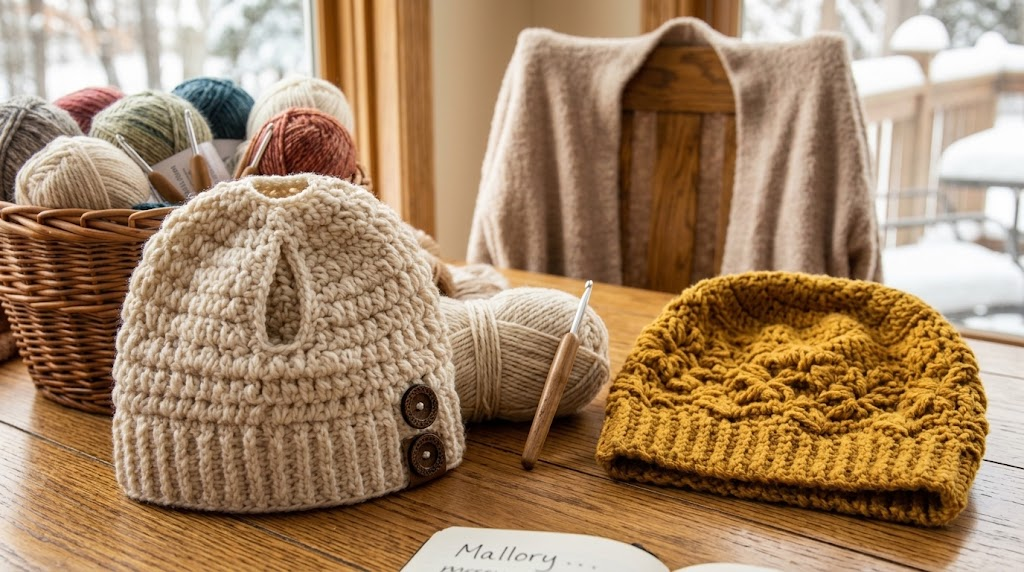
I love patterns that give me more than one way to wear the finished piece.
A messy-bun hat is particularly useful when you want the warmth of a hat without completely flattening your hairstyle.
Why the design works for winter
A hat doesn’t have to be complicated to look interesting.
Texture, shaping, color, and a small decorative button can be enough to turn a simple crocheted hat into something that looks thoughtfully designed.
The slouch version also gives you more room at the back, creating that relaxed winter look many crocheters love.
If I were making this style today, I’d experiment with soft neutral colors first.
A few combinations I’d consider are:
Classic: cream + brown button
Soft: blush + ivory button
Winter: dusty blue + silver-gray button
Earthy: olive + natural wood button
Choosing yarn
For a winter hat, I generally look for yarn that gives warmth without making the finished fabric unnecessarily heavy.
Worsted-weight yarn is a practical place to start for many hat patterns, but always follow the specific pattern’s recommended yarn and gauge.
One of the biggest mistakes beginners make is choosing yarn solely because they love the color.
Color matters, but fiber, weight, gauge, and texture matter too.
3. Pearl Beanie
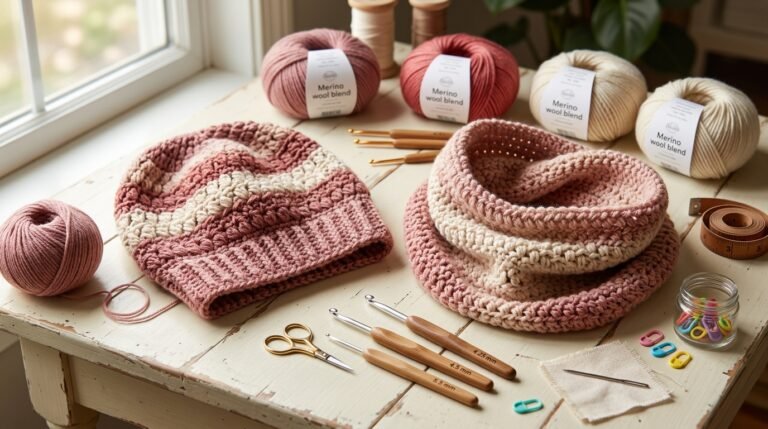
The third design is the Pearl Beanie, and this is probably the type of project I would reach for when I want a winter accessory with more visible texture.
The roundup describes the Pearl Beanie as featuring puff-stitch texture and a knit-look band, and identifies it as another reader favorite.
That combination is what makes the design interesting.
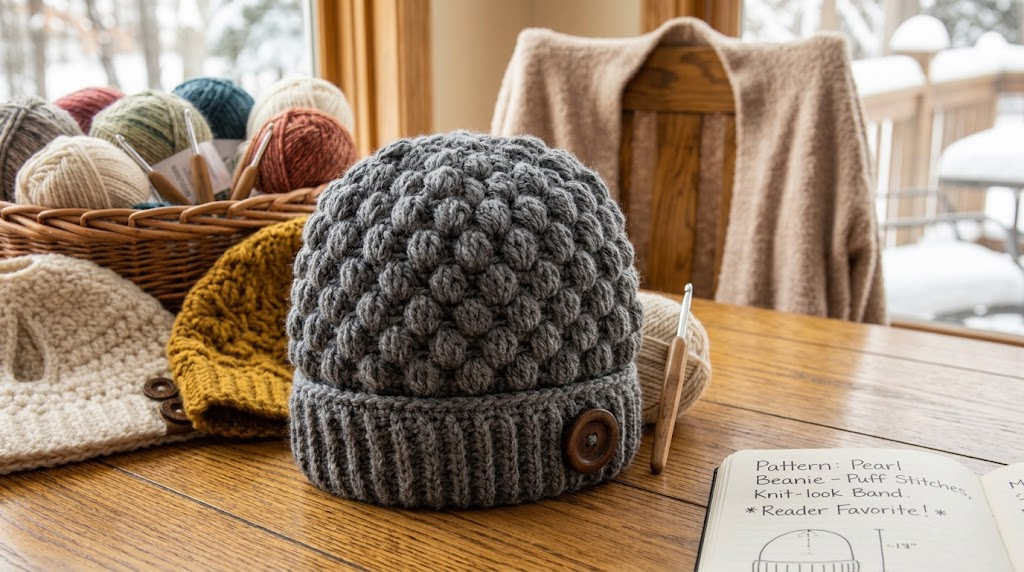
The puff stitches create dimension across the hat, while the band gives the bottom a different visual texture.
Why textured hats are so satisfying
Texture can make a relatively simple silhouette look much more elaborate.
A basic beanie shape isn’t difficult to understand. What changes its personality is the stitch pattern.
Puff stitches are particularly good at creating that effect because they stand up from the fabric.
If you’re working with a light-colored yarn, the shadows between the raised stitches can make the texture even more noticeable.
What I’d watch for
Puff stitches can use more yarn than simpler stitches.
That’s something I always keep in mind when planning a textured project.
If a pattern recommends a specific yarn quantity, I wouldn’t buy exactly the bare minimum. Having a little extra yarn is much less stressful than reaching the final few rounds and discovering that you are short.
The same principle applies to gauge.
If your stitches are significantly tighter than the designer’s gauge, you may use more yarn and end up with a smaller hat.
A useful hook upgrade
For projects involving repetitive textured stitches, I find a comfortable ergonomic hook especially useful.
One option worth considering is the Clover Amour Crochet Hook Set, which includes multiple hook sizes and ergonomic handles.
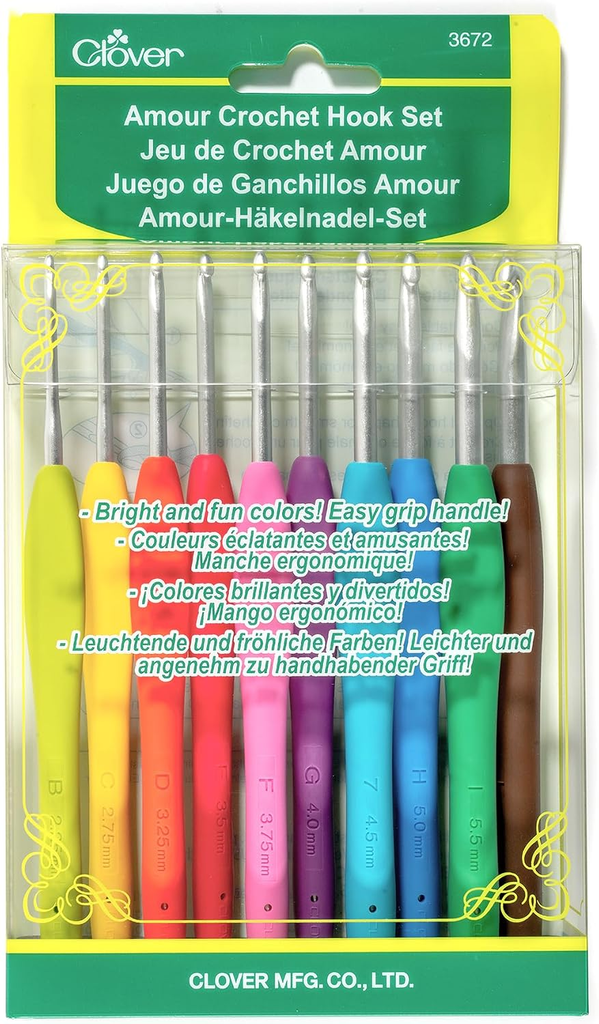
I wouldn’t say you need a whole set just to make a beanie. If you already have the correct hook size, use it. But a multi-size set becomes useful when you regularly switch between hats, blankets, garments, and smaller projects.
4. 7 Hour Cocoon Cardigan
The fourth project changes things completely.
The 7 Hour Cocoon Cardigan is a wearable rather than a small accessory. The original roundup highlights its quick construction, button closure, and stitch pattern as features that readers liked.
The cocoon shape is one of my favorite cardigan constructions because it can look complicated while being relatively straightforward in concept.
Instead of building a traditional fitted sweater with many separate pieces, cocoon-style garments often rely on a simpler construction that creates a loose, draped silhouette.
Why I’d consider making one
A handmade cardigan can be incredibly versatile.
You can wear it over:
- Jeans
- Leggings
- A simple dress
- A long-sleeve top
- A basic winter outfit
And because the shape is relaxed, it doesn’t have to look overly formal.
The button closure is another detail I like. A single button can change how the cardigan sits and adds a small decorative element.
The biggest thing to check: gauge
Garments are much less forgiving than accessories.
If my gauge is wrong on a scarf, I might simply end up with a scarf that’s slightly wider or narrower than expected.
With a cardigan, the difference can affect the entire fit.
Before starting a wearable project, I recommend making the gauge swatch even if you’re tempted to skip it.
It can feel like an unnecessary extra step when you’re excited to start, but it can save you from spending hours making a garment that doesn’t fit the way you expected.
My second useful Amazon tool
For a cardigan, I would also keep a good set of locking stitch markers nearby.
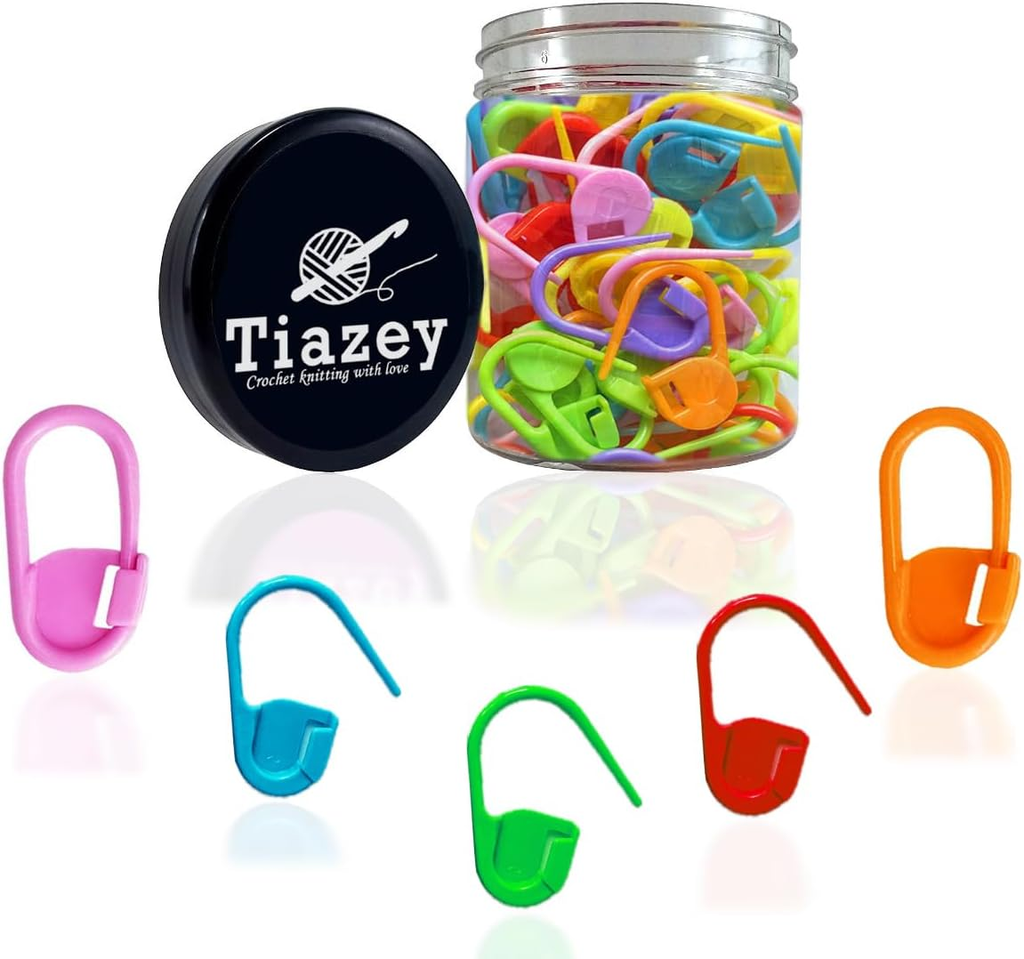
I like locking markers because they can be attached directly to a stitch without needing to slide them onto the hook first.
They’re useful for marking:
- Pattern repeats
- Increase points
- Decrease points
- Corners
- Sleeve openings
- Joining locations
They’re inexpensive, reusable, and useful far beyond one particular cardigan.
5. Winter Blossom Slouch
The fifth and final project in the original winter roundup is the Winter Blossom Slouch.
This is an especially interesting design because the stitch was intended to create a look similar to the Jasmine stitch while being easier to work.
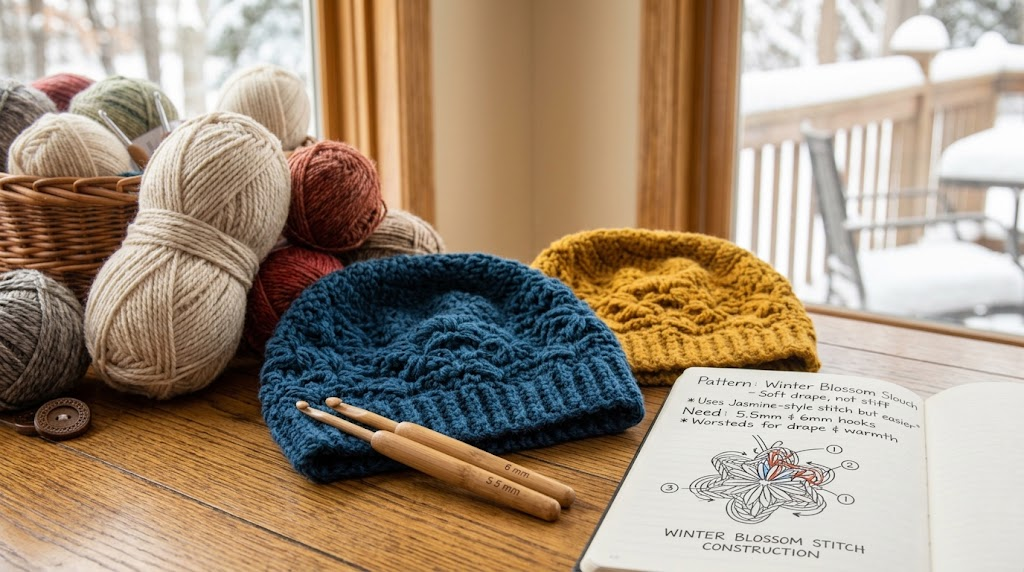
The separate Winter Blossom pattern information says the stitch has more drape than a stiff Jasmine-style stitch, and the pattern offers both a regular beanie and slouch option. It uses worsted-weight yarn and 5.5 mm and 6 mm hooks.
That’s a useful combination for a winter hat because texture doesn’t necessarily have to mean stiff fabric.
Why drape matters
When I think of a slouch hat, I don’t want a fabric that feels rigid.
The hat needs enough structure to hold its shape but enough softness and flexibility to create that relaxed slouch.
That’s why yarn choice matters so much here.
A yarn can completely change the personality of the same stitch.
A firm yarn might emphasize stitch definition and create a structured hat.
A softer yarn may create a more relaxed, draped appearance.
A good beginner challenge
I wouldn’t necessarily call a textured stitch project the absolute first crochet project for someone who has never held a hook.
But if you’ve already learned basic stitches and can comfortably read a pattern, a project like this can be a nice next step.
The pattern information indicates that someone comfortable with puff stitches should be able to tackle it, which gives a useful clue about the skill involved.
Which Winter Crochet Project Should You Try?
Rather than choosing based only on appearance, I like to think about what I actually want to make.
If I want something small and wearable, I’d look toward the hats.
If I want a practical handmade accessory, the boots are an interesting challenge.
If I want something I can wear around the house or layer over other clothes, the cocoon cardigan is appealing.
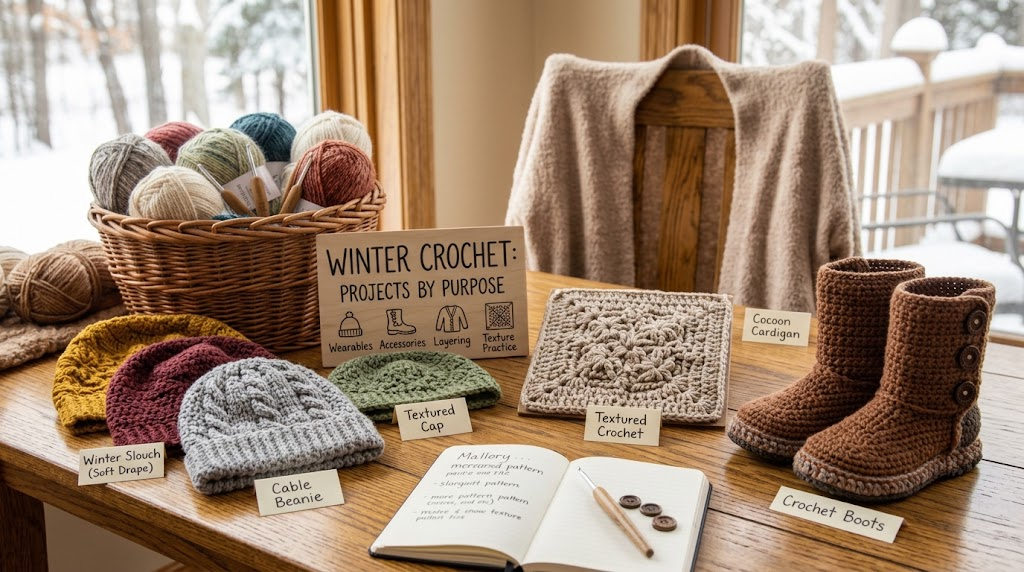
And if my main goal is to practice textured crochet, the Pearl Beanie or Winter Blossom Slouch gives me more opportunity to work with interesting stitch patterns.
The original roundup brings together these five projects because they cover several different types of winter crochet rather than repeating the same kind of accessory.
Final Thoughts
What I like most about revisiting older crochet patterns is realizing that a good design doesn’t necessarily become irrelevant with time.
Trends change, yarn colors change, and new patterns appear every day, but a warm hat, cozy cardigan, or handmade pair of boots can remain useful for years.
The five winter patterns —Classic Boots, Mallory Messy Bun or Slouch Hat, Pearl Beanie, 7 Hour Cocoon Cardigan, and Winter Blossom Slouch—each offer a different type of crochet experience.
For me, the biggest lesson is to choose a project based on the skill I want to practice rather than simply picking the prettiest finished photograph.
A textured hat can teach you stitch definition.
A cardigan can teach you gauge and garment construction.
Boots can introduce you to crochet footwear.
And a slouch hat can help you understand how yarn choice affects drape.
That’s what makes crochet so enjoyable: there’s always another technique to learn.
Amazon affiliate disclosure: Some links in this article are Amazon affiliate links. If you purchase through them, I may earn a qualifying commission at no additional cost to you. Product availability and pricing can change.