Crocodile Stitch Baby Sandals Crochet Pattern: Cute, Textured & Handmade Baby Booties
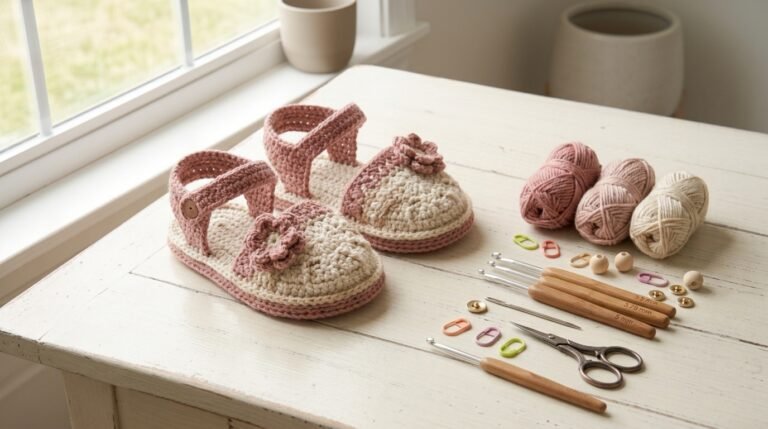
The crocodile stitch baby sandals crochet pattern is a beautiful project for anyone who loves creating delicate handmade baby accessories. What makes these little sandals special is their gorgeous layered texture. The crocodile stitch creates tiny overlapping scales that look almost like flower petals, giving ordinary crochet baby shoes a charming boutique-style appearance.
I love how this stitch adds so much detail without needing complicated color changes or extra decorations. You can make the sandals in soft peach, ivory, pastel pink, baby blue, or even a combination of two complementary shades.
These crochet baby sandals are especially lovely for spring and summer outfits, baby shower gifts, newborn photography accessories, and handmade baby clothing collections.
Why Crocodile Stitch Baby Sandals Are So Special
The crocodile stitch is one of those crochet techniques that looks complicated but becomes easier once you understand how the stitches are positioned.
Instead of creating a flat fabric, it produces overlapping fans that resemble little scales. This makes it especially attractive for baby sandals because the textured upper becomes the main decorative feature.
Here are some reasons I love this design:
- Beautiful texture: The layered scales give each sandal a unique handmade appearance.
- Soft color combinations: You can experiment with pastels, neutrals, and brighter summer shades.
- Lovely handmade gifts: They make thoughtful additions to baby shower gift baskets.
- Multiple baby sizes: The referenced design includes sizes from 0–3 months through 9–12 months.
- Versatile styling: They look beautiful with baby dresses, rompers, and lightweight summer outfits.
My favorite color combination for this design is light peach with an ivory sole. It gives the sandals a warm, delicate appearance while allowing the crocodile stitch to stand out.
Materials Needed for Crochet Crocodile Stitch Baby Sandals
Before beginning, gather all your supplies. Using the appropriate yarn thickness and crochet hook will help you achieve a neat and consistent result.
1. Worsted Weight Yarn
The sole of the referenced design uses medium-weight yarn, also called worsted-weight or category 4 yarn.
Choose a smooth, soft yarn that creates a comfortable fabric. Since the sole is the foundation of the sandal, consistent tension is important.
Lovely colors include:
- Light peach
- Cream
- Ivory
- Pale yellow
- Soft pink
- Baby blue
- Beige
2. DK Weight Yarn
The decorative toe section uses DK-weight yarn.
This slightly lighter yarn helps create a delicate textured upper without making the scales look unnecessarily bulky.
You can use the same color as the sole for a coordinated appearance or choose a contrasting shade.
3. Crochet Hooks
The referenced pattern specifies:
- 3.75 mm (F) hook for sizes 0–3, 3–6, and 6–9 months.
- 3.75 mm and 4.25 mm (G) hooks for size 9–12 months.
Always follow the pattern’s gauge and instructions rather than assuming that a particular hook will work with every yarn.
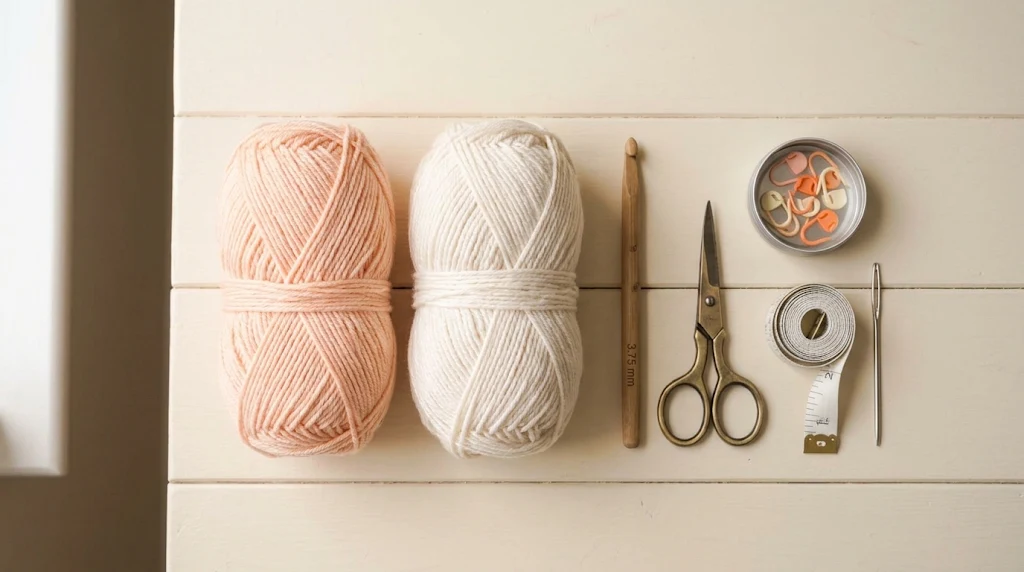
4. Additional Supplies
You will also need:
- Tapestry needle
- Small scissors
- Measuring tape
- Stitch markers
- Yarn in your selected colors
These small tools make the project easier to organize and finish neatly.
Understanding the Crocodile Stitch
The most important part of this project is learning how to create the crocodile stitch correctly.
This stitch is made using groups of double crochet stitches worked around the posts of a foundation row. The result is a series of overlapping fans that resemble small scales.
What You Need to Know Before Starting
The stitch generally uses:
- Chain stitch (ch)
- Slip stitch (sl st)
- Single crochet (sc)
- Double crochet (dc)
- V-stitch
- Crocodile stitch
A V-stitch commonly consists of two double crochet stitches worked into the same space with a chain between them.
The crocodile scale is then formed around the posts of neighboring double crochet stitches.
How to Make a Crocodile Stitch Scale
For a basic practice sample:
- Create a foundation row with pairs of double crochet stitches separated by chain spaces.
- Turn your work according to the stitch pattern.
- Work five double crochet stitches around the post of the first double crochet.
- Work five more double crochet stitches around the neighboring post, following the pattern’s direction.
- Adjust the stitches gently so they form a rounded, overlapping fan.
- Repeat the process across the foundation.
The important detail is that the hook goes around the stitch posts rather than into their top loops.
Practice this technique on a small sample before using it on the baby sandals. This makes it easier to recognize the posts and maintain consistent scales.
Step-by-Step Construction of Baby Crocodile Stitch Sandals
The following stages explain the construction process. They are a project guide, not a replacement for the complete paid pattern’s stitch counts and shaping instructions.
Step 1: Make the Baby Sandal Soles
PROJECT STAGE 1
Begin with the worsted-weight yarn and the appropriate hook.
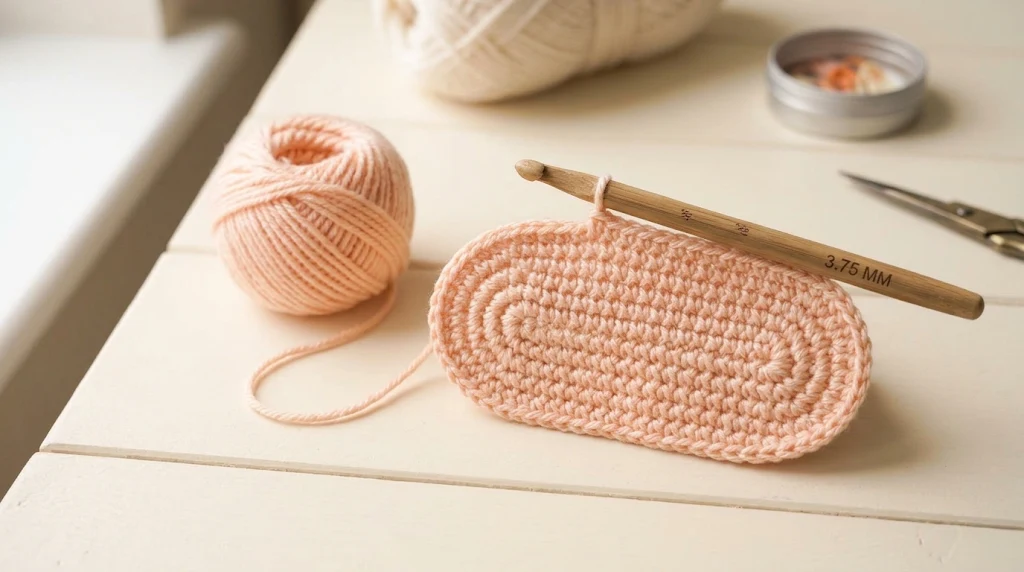
The sole forms the foundation of the sandal. Baby sandal soles are generally oval-shaped, with rounded ends and a flat central section.
Work the foundation chain and crochet around both sides, placing increases where needed to create the oval shape.
A few helpful suggestions:
- Keep your tension consistent.
- Count every round carefully.
- Check the length with a measuring tape.
- Make sure the sole lies flat.
- Compare the first and second soles before continuing.
If the edges begin curling upward, check your stitch count and tension. Uneven increases can affect the shape.
Step 2: Prepare the Toe Section
PROJECT STAGE 2
Once the soles are ready, prepare the foundation for the decorative toe section.
This stage creates the structure that supports the crocodile scales.
The placement of the V-stitches is important because the crocodile stitch is worked around their double crochet posts.
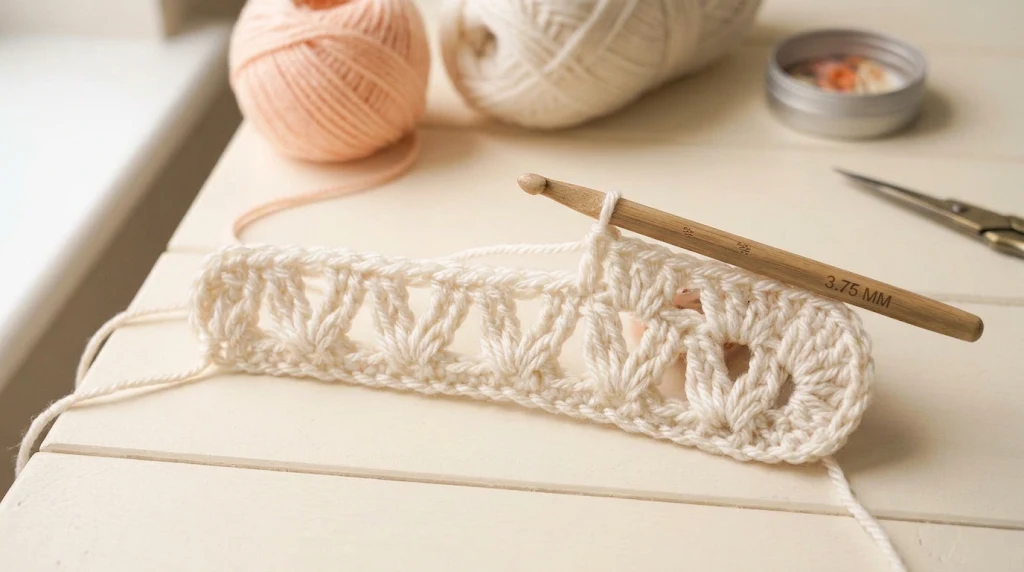
Take your time with this section. If the foundation spacing is uneven, the finished scales may look crowded or spread apart.
I recommend using stitch markers to identify the beginning and end of the working area.
Step 3: Create the Crocodile Stitch Scales
PROJECT STAGE 3
Now comes the most decorative part of the project.
Work the crocodile stitch around the posts of the foundation stitches, following the sequence and direction specified by your chosen pattern.
Each completed fan should sit neatly beside the previous one.
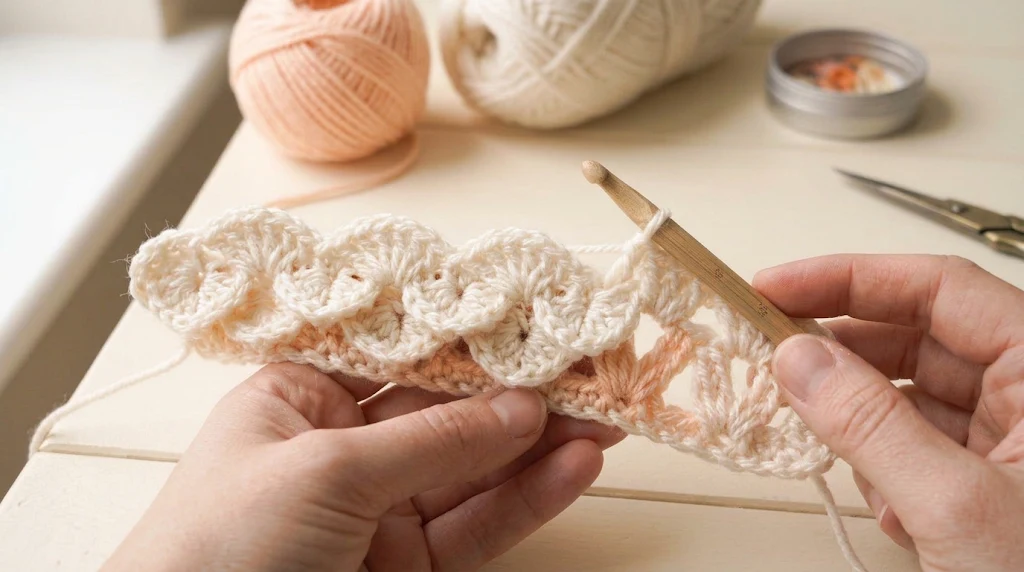
Here are some tips for beautiful scales:
- Avoid pulling the yarn too tightly.
- Keep the number of stitches consistent.
- Arrange each fan gently with your fingers.
- Check that the scales face the same direction.
- Make sure the fabric remains comfortable and flexible.
If this is your first time using crocodile stitch, do not worry if your first few scales look slightly uneven. A little practice usually makes the technique easier to manage.
Step 4: Shape and Position the Upper
PROJECT STAGE 4
The upper section gives the sandal its recognizable shape.
Check how the decorative toe section sits over the front of the sole. It should be positioned evenly and should not feel excessively tight.
If the design includes separate straps or an ankle section, follow the pattern’s shaping and attachment instructions carefully.
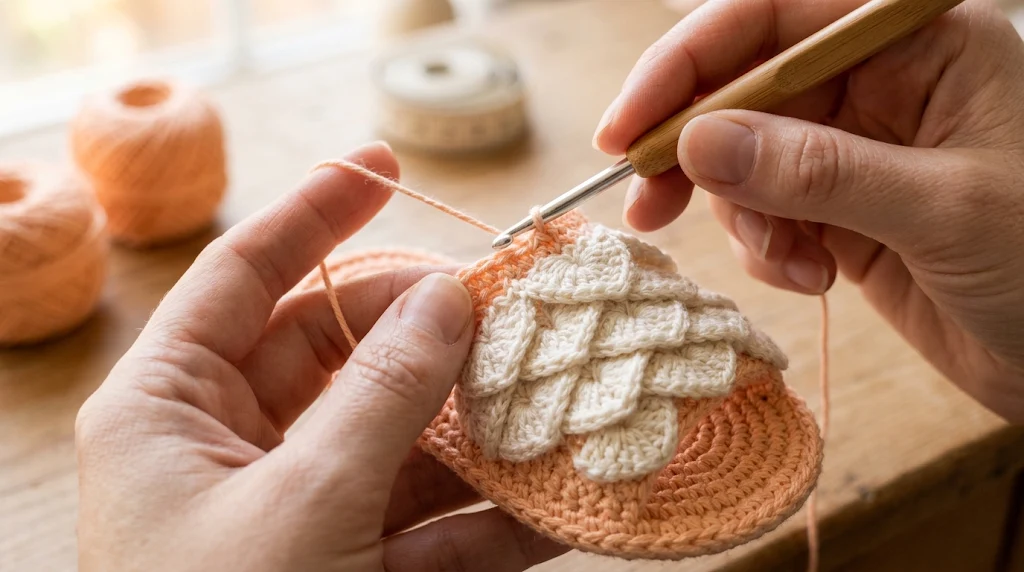
Before securing any joining seams, compare the upper with the opposite sandal.
Both pieces should have similar proportions and a comfortable opening.
Step 5: Make the Second Sandal
PROJECT STAGE 5
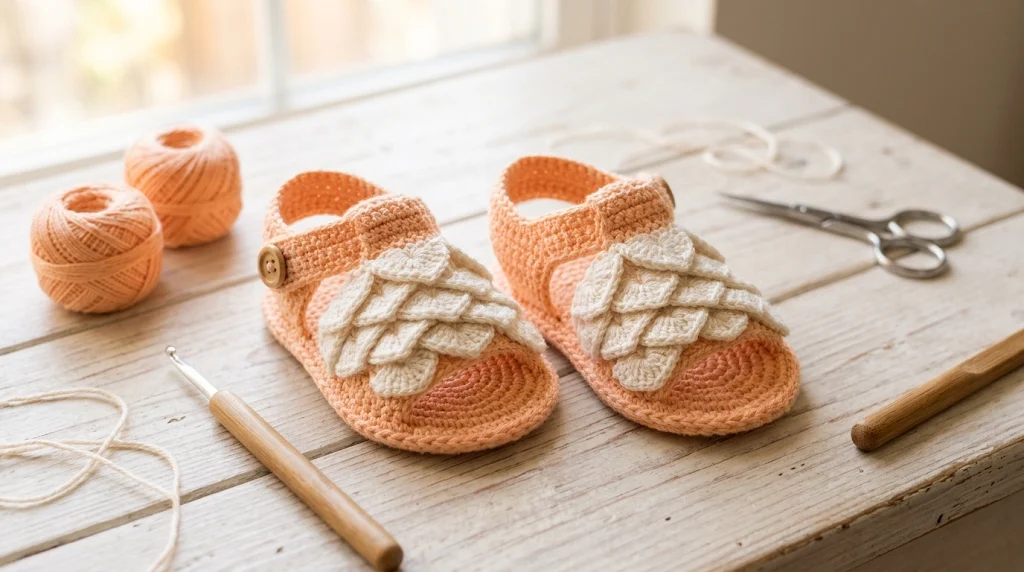
Repeat the same construction for the second sandal.
This is where careful measuring becomes especially useful.
Keep the completed first sandal nearby and compare:
- Sole length
- Sole width
- Number of crocodile scales
- Upper placement
- Strap length
- Overall height
Small differences can make a matching pair look uneven, so it is worth checking before finishing.
Step 6: Finish and Secure All Yarn Ends
PROJECT STAGE 6
Use a tapestry needle to weave in the loose ends securely.
Inspect the sandals carefully, especially around the scales, sole edges, and any strap attachments.
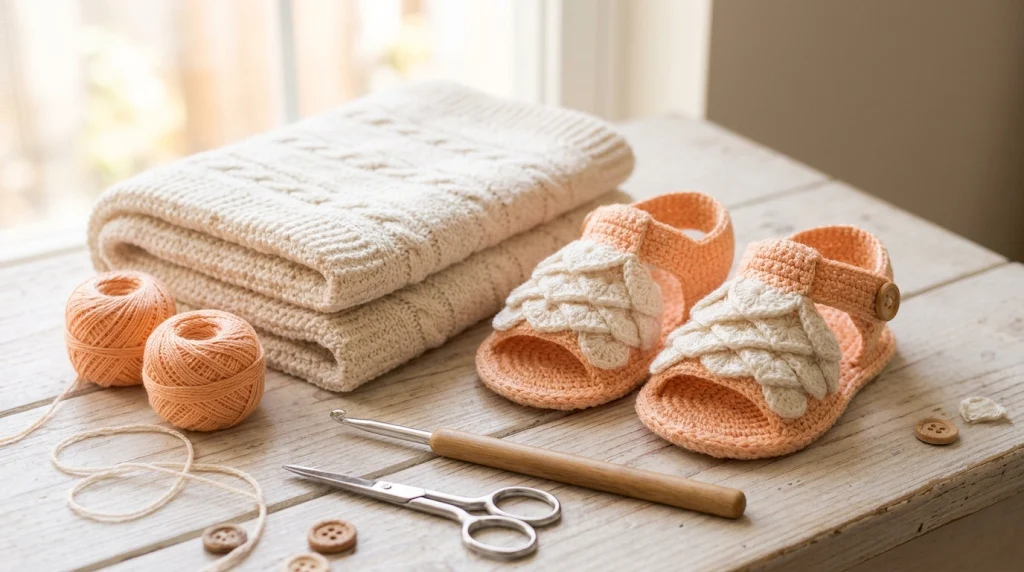
Make sure there are no loose loops, exposed yarn tails, or sharp ends.
Avoid using detachable buttons, beads, or other small decorations on baby accessories. A simple crochet finish is attractive and avoids unnecessary small parts.
Choosing the Right Baby Sandal Size
The referenced design includes four size ranges:
| Baby age | Pattern size |
|---|---|
| 0–3 months | Newborn |
| 3–6 months | Young infant |
| 6–9 months | Growing infant |
| 9–12 months | Older infant |
Age ranges are only general estimates. Babies grow at different rates, so measuring the baby’s foot is a better way to choose a size.
Measure from the back of the heel to the longest toe. Also consider the width across the ball of the foot.
The finished sandal should fit comfortably without squeezing the toes or leaving excessive space.
Remember that a crochet sandal is a decorative accessory, not a supportive walking shoe.
My Favorite Color Combinations for Crocodile Stitch Sandals
One of the best things about making crochet baby sandals is experimenting with different colors.
Here are five combinations worth trying.
1. Light Peach and Ivory
MY FAVORITE FOR THIS BLOG
Light peach creates a warm base, while ivory makes the crocodile scales stand out beautifully.
2. Baby Pink and White
A delicate combination that looks lovely with baby dresses and pastel outfits.
3. Pale Yellow and Cream
This cheerful combination is perfect for spring-inspired baby accessories.
4. Baby Blue and White
A fresh, classic color combination for a soft summer look.
5. Beige and Soft Brown
These natural shades create a timeless handmade appearance.
For a coordinated look, use one color for the sole and another for the decorative scales.
Two Helpful Amazon Products for This Project
You do not need a large collection of supplies to make crochet baby sandals. I would focus on two useful purchases that serve different purposes.
1. Lion Brand 24/7 Cotton Yarn
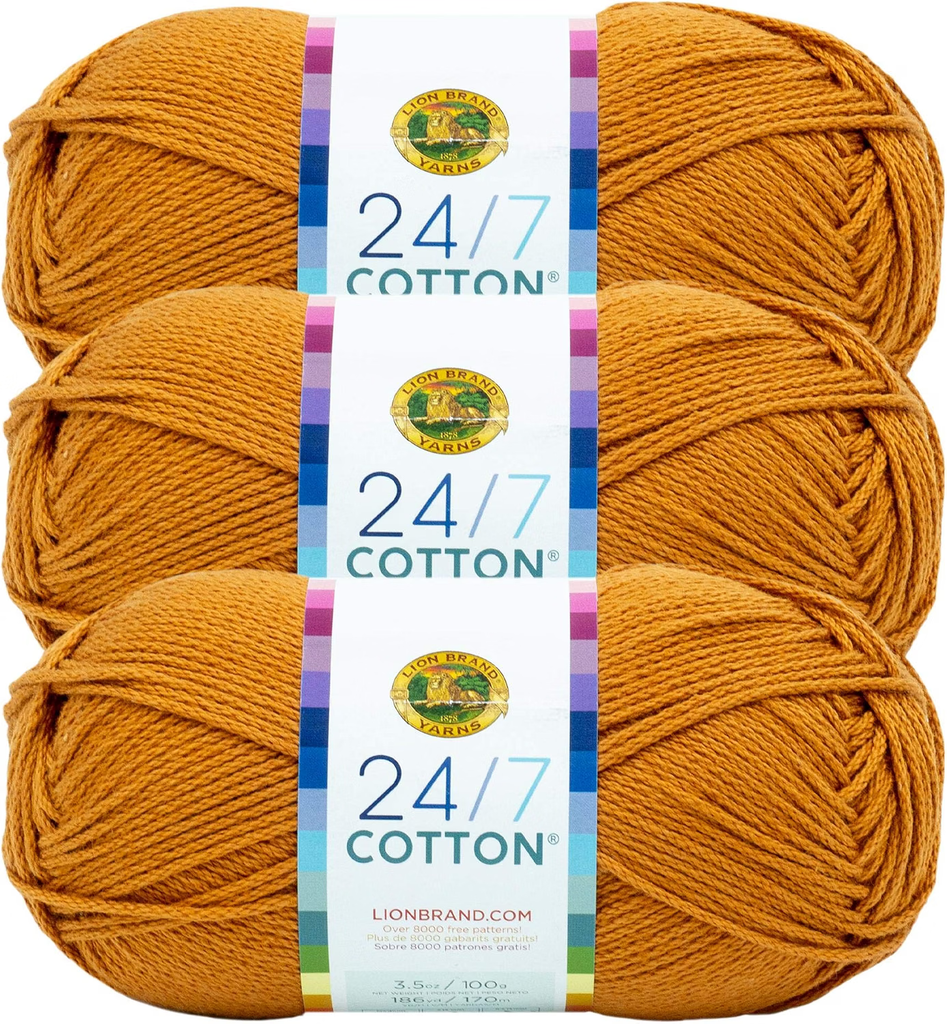
Lion Brand 24/7 Cotton
Useful yarn option
100% mercerized cotton · Worsted weight
A smooth yarn with good stitch definition, useful for practicing and creating structured crochet details.
2. Clover Amour Crochet Hook – 3.75 mm
Clover Amour 3.75 mm Crochet Hook
Useful crochet tool
Size F · Ergonomic handle
A comfortable hook option for working on the smaller stitches and detailed sections of the project.
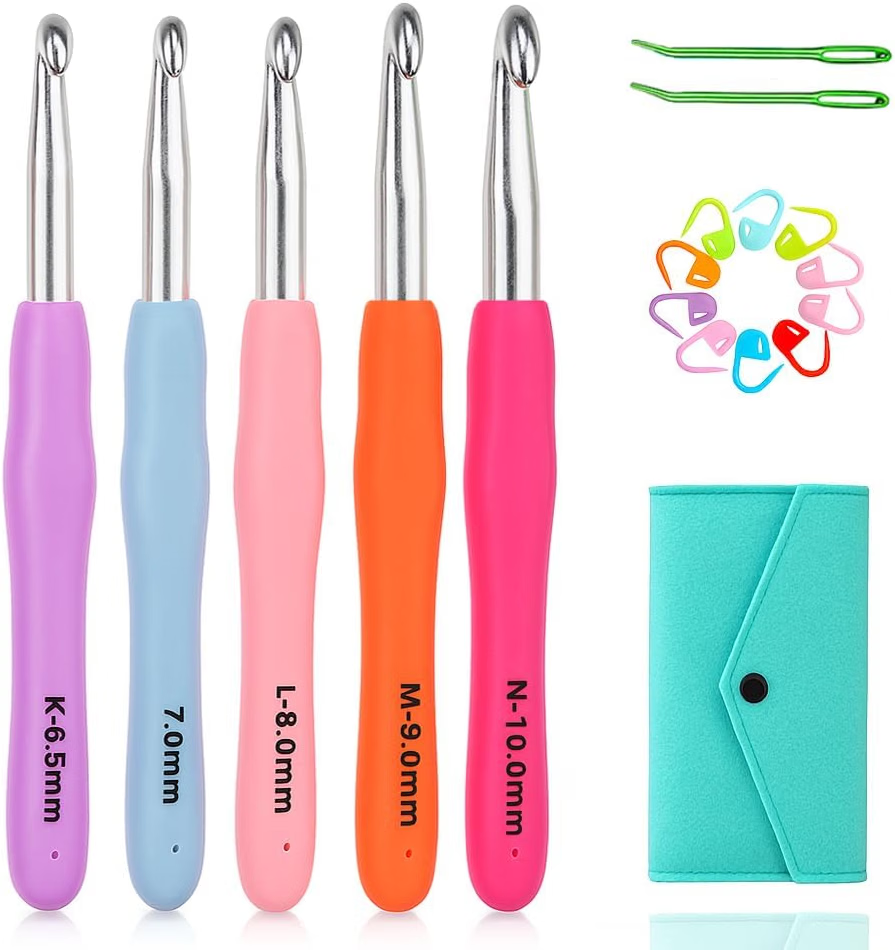
Why consider it? The ergonomic handle is designed for a comfortable grip, and the smooth hook shape helps yarn move easily. Clover lists a 3.75 mm F size in this range. Clover USA+1
Tips for Getting Neat and Beautiful Crocodile Stitches
The scales are the main attraction, so it is worth giving them a little extra attention.
Keep your tension balanced. Tight stitches can make the scales stiff, while loose stitches may make them look uneven.
Use good lighting. It is easier to identify stitch posts when you can see the foundation clearly.
Practice before starting. A small sample helps you understand the direction of each scale.
Check the spacing. Make sure the fans are distributed evenly across the upper.
Use matching yarn. Choose yarn thicknesses that work together rather than mixing very different textures.
Measure regularly. Do not rely only on age labels when selecting a baby size.
How to Care for Crochet Baby Sandals
Handmade baby accessories should always be kept clean and in good condition.
Follow the care instructions for your selected yarn. If hand washing is recommended, use cool or lukewarm water and a gentle detergent.
After washing:
- Remove excess water without twisting the sandals.
- Gently reshape the soles and textured upper.
- Allow them to dry completely.
- Store them in a clean, dry place.
Before each use, check for loose yarn, damaged stitching, and loose attachments.
These sandals are best treated as soft decorative footwear. They are not designed to provide traction, warmth protection, or walking support.
Frequently Asked Questions
1. Is crocodile stitch difficult for beginners?
It may take some practice because the stitches are worked around posts rather than through ordinary stitch tops. Beginners who understand double crochet can learn the technique by making a small sample first.
2. What yarn is best for baby crochet sandals?
Soft, comfortable yarn with clear stitch definition is a good starting point. Choose the weight specified by your pattern and check the manufacturer’s washing and fiber information.
3. Can I use one yarn weight for the entire sandal?
The referenced design uses worsted-weight yarn for the sole and DK-weight yarn for the toe section. Changing these weights can affect the proportions, so follow the original material recommendations where possible.
4. Can I make these sandals in larger sizes?
You may be able to adapt a design, but increasing the sole and upper independently can affect the fit. Use a pattern that provides the required measurements and shaping instructions.
5. Are crochet baby sandals suitable for summer?
They have an open sandal-style appearance that makes them attractive for warm-weather outfits. However, they are decorative accessories and should not replace protective footwear.
6. Can I sell finished crochet baby sandals?
Check the copyright and selling terms of the specific pattern you use. Some designers permit the sale of finished handmade items with attribution, while others have different conditions. Never redistribute or sell the written pattern without permission.
Final Thoughts
Crocodile stitch baby sandals are a lovely project for crocheters who enjoy detailed textures and handmade baby accessories.
What I particularly like about this style is the way a simple combination of yarn and crochet stitches creates such a beautiful layered effect. The little scales make the sandals look special, even when you use only two soft colors.
Take your time with the foundation, practice the crocodile stitch, and compare both sandals before finishing. These small details can make a big difference in the final result.
Whether you choose light peach and ivory, baby pink and white, or classic cream, the finished sandals can become a thoughtful handmade gift and a beautiful addition to your crochet collection.
Happy crocheting!
CrochetCraftCorner